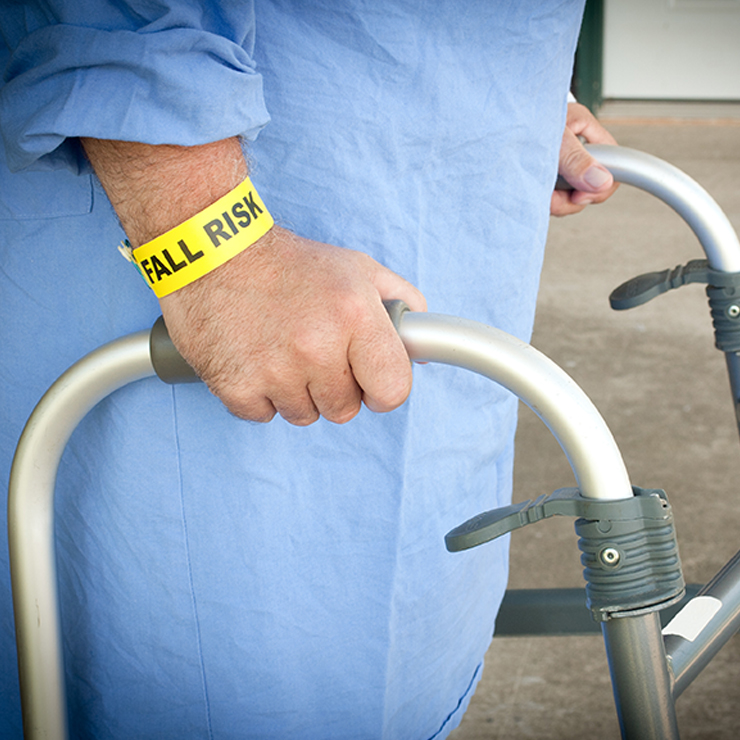
 According to the National Council on Aging, an older adult suffering a fall-related injury is seen in an emergency department every 11 seconds. When patients arrive at a skilled nursing facility after breaking a bone in a fall, the focus is naturally on rehabilitation: physical therapy, pain management, wound care, and getting the patient mobile again. What often doesn’t happen is a careful review of the medications that may have increased their risk of falling in the first place, or a conversation about medications that could help prevent the next fall. This is the gap PRISM—or Prevention of Injury in Skilled Nursing Through Optimizing Medications—hopes to close.
An ongoing study funded by the Patient-Centered Outcomes Research Institute (PCORI) and led by teams at Duke University School of Medicine and Harvard Medical School/Hebrew SeniorLife, PRISM revolves around a simple idea: that the days or weeks a patient spends in a SNF after a fall-related fracture is a rare, underutilized opportunity to rethink their medications. That might mean weaning off medications that increase fall risk, perhaps by causing drowsiness or dizziness; or it might mean adding treatment for osteoporosis, an often-undetected underlying condition that can increase the risk of fracture.
Forty-two SNFs have volunteered to participate. Working with a PRISM-provided fracture nurse consultant, who reviews medications and makes recommendations to the patient and patient’s care team, these SNFs are helping to answer the question about whether this approach improves patient outcomes. SNFs’ involvement after a simple onboarding process is critical to making this study succeed.
“A Great Leverage Point”
“Skilled nursing facilities are a really great leverage point to reach these patients,” said Cathleen Colón-Emeric, M.D., Professor of Medicine and Chief of the Division of Geriatrics at Duke University and PRISM’s principal investigator. “Sixty percent of these folks spend two weeks or so in post-acute care and in skilled nursing facilities receiving care, and that’s an opportune time to optimize their medications to improve their outcomes.”
“Taking the time to really think about those medications carefully and talk about them with a patient and family and make the decision to taper some of them is really important but takes a lot of provider time” she added. “We're trying to support the providers in doing that in a more efficient way.”
At San Francisco Center for Jewish Living, one of the participating SNFs, physician James Deardorff, sees PRISM as a way for SNFs to bring even more value to their patients by initiating needed conversations about appropriate prescribing. “Patients are here for an acute event, and so they’re more likely to be receptive to either de-prescribing or prescribing medications,” he said. “In this case, they’ve had a fracture that might be related to a fall and could be related to a medication adverse effect. I think this is a good time period to have these conversations.”
“We know that many people have underlying osteoporosis and don't receive treatment,” he added. “A lot of times, the decision to start a medication like a bisphosphonate ends up getting deferred from person to person. If we’re able to start these medications at a skilled nursing facility, it can benefit patients who have recently had a fracture and have an indication for these medications.”
Treating the Overmedication Epidemic
The data behind PRISM tell a sobering story. As a recent CDC fact sheet explains, roughly one million seniors are hospitalized for fall-related injuries every year, with almost 319,000 specifically experiencing hip fractures. Although more than 25% of older adults suffer falls every year, less than half of these falls are reported. Crucially, every fall increases the risk of another: per the CDC, “falling once doubles your chances of falling again.”
Making matters worse is the fact that many seniors are on a cocktail of medications with under-examined risks. According to a recent analysis by the Wall Street Journal, “one in six seniors enrolled in Medicare’s drug benefit were prescribed eight or more medications at the same time.” Of this group, more than 3.9 million were on 10 or more drugs at the same time, and more than 419,000 were on 15 or more. These medications included sedatives and muscle relaxants that are already considered dangerous for seniors when taken by themselves, let alone in combination with other medications that impact the patient’s central nervous system.
The rising tide of overmedication is what PRISM aims to address. “Older adults accumulate more and more chronic diseases, they go to lots and lots of different providers for those different diseases,” Colón-Emeric said. “They get prescribed lots of different things focused on those diseases, but nobody’s kind of stepping back and looking at the whole picture or periodically reassessing to say, ‘Hey, is the risk of this medication still worth the benefit that the patient’s getting from it?’ They take, on average, 12 in skilled nursing facilities. Many are taking over 20, and a lot of those interact with each other.”
“After an injury, a fall, or a fracture, it’s a really important time to do a careful risk-benefit assessment of an older adult’s medications,” she added.
A Light Touch
PRISM is designed to make things as easy as possible for SNFs, adapting to their existing workflows rather than disrupting them. Participating communities designate a “facility champion”—typically a nurse—who serves as a liaison with the program. The champion’s duties are light; other than a short weekly check-in with PRISM, the job mostly involves coordinating paperwork between PRISM staff and the facility’s clinicians.
“It’s easy and smooth,” attested Sarah Fennimore, champion at Hudson Bay Health and Rehab in Vancouver, Washington. “Our building is between 75 and 80 people, and it probably takes five minutes per person.” Once she was onboarded into the process, she added, the main operational change was explaining to clinicians that a third party would be looking at fracture patients and making recommendations. “I feel like our doctors agree with their recommendations 95% of the time.”
From there, PRISM’s fracture nurse consultants take the lead. Working remotely with the support of an interprofessional team of geriatricians, osteoporosis specialists, and pharmacists, they review each patient’s chart and develop a “medication optimization plan”—a concise, one-page set of recommendations for the facility’s provider. The consultant reaches out to the patient and family to discuss the plan, relieving the facility of time-consuming conversations. When the patient transitions back to the community, PRISM nurses continue following up with them and their primary care providers, coordinating care and providing additional resources as needed.
The study compares three evidence-based approaches to medication optimization. Enrolled facilities cycle through all three in a randomized sequence, spending approximately six months on each: one focused on treating osteoporosis, one focused on deprescribing medications that increase fall risk, and one combining both strategies simultaneously. Facilities participate for 18 months, with the study involving minimal cost increases (typically from adding osteoporosis medication) or even cost reductions (from deprescribing existing medications).
“What we’re really trying to understand is whether focusing on osteoporosis medication management, deprescribing all those fall risk-increasing drugs, or doing both at the same time, results in better outcomes for patients and families,” Colón-Emeric said. “Facilities get all three of those focus areas in random sequence. They’ll get six months focused on osteoporosis, six months of de-prescribing, and six months of both.”
Putting Patients First
As PRISM fracture nurse consultant Rachel Passman-James explained, her role is to put the patient’s needs front and center. “We share our recommendations, but first we hear about what matters most to them so that we can use that to individualize the recommendations,” she said. “Making changes to your medication is a big deal, so there’s no pressure. We follow up with them at one month, so often they talk to their PCP before deciding on changes or just have more time to make a decision.”
Another important part of her job is ensuring that the program’s workflow is tailored to each facility’s unique profile. “Their needs vary depending on their geography, patient populations, whether they’re in a big city or rural area, if their patients are coming from big teaching hospitals or community hospitals,” she explained. At one Texas facility serving a predominantly Spanish-speaking population, for instance, her team learned to route recommendations through the physician first before speaking with patients. “They are more likely to accept a recommendation if a provider has already agreed on it,” she said. “So normally we come up with a plan, conduct shared-decision making, and then send it to the provider of the facility. But for this facility, I send it to the provider first and make sure they agree, and then I talk to the patients.”
For Deardorff, the PRISM onboarding process was a fairly simple matter: after identifying the right facility champion, his team and PRISM’s undertook an iterative process of finding the most efficient workflows. “We piloted putting the medication optimization plans in binders for different clinicians to look at, and the nurse champion would follow up with them and see if they have any questions about the recommendations,” he said. “The hard part is communication with clinicians. We’ve had to do repeated reminders around making sure they’re aware of what’s going on, so that when they see these sheets, they’re not like, ‘What is this and why do I need to sign it? Where is this recommendation coming from?’”
 He added that PRISM’s own resources were helpful in facilitating that process—especially a one-page pocket card explaining the rationale for its recommendations. “The pocket card was super helpful,” he said. “Their website is great in terms of resources for deprescribing, bone health, and dosing recommendations.”
Steve Manning is a journalist based in New York City.
Provider magazine includes information from a variety of sources, such as contributing experts. The views expressed by external contributors do not necessarily reflect the views of Provider magazine and AHCA/NCAL. Learn how to submit an article.