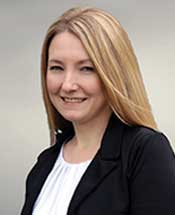
 Sarah Silva was a brand-new face when she walked into a skilled nursing facility (SNF) during her junior year of high school. The daughter of a coal miner and a horticulturist, she had no previous experience in the world of long term and post-acute care. The training program, which allowed students to perform clinicals outside of the classroom, caught her eye. But after spending some time in the SNF, something caught her heart.
“It wasn’t something I had experienced before,” she says. “In the moment, I just knew that I enjoyed it. I loved getting to know the residents, and it became obvious that it was something I loved. I look at it now and I can say it was life changing.”
Enter Assisted Living
Silva changed her focus from medical school to being a certified nursing assistant. With continued exposure to skilled nursing, she enjoyed the interaction with residents and the healing that took place, but she realized that the time spent with residents, although meaningful, was short.
She then heard about a new assisted living building that was being constructed in her local community. Once she went in, she was hooked.
“It was new and beautiful,” says Silva. “I fell in love with assisted living because I love meeting people where they are. You get to build long-term relationships with the residents, and you are with them every single day. Once I started down that road, I stayed there.”
Over 20 years later, Silva grew through a number of positions in assisted living, both in Oregon and around the country. Today, she is the chair of the National Center for Assisted Living (NCAL), the assisted living arm of the American Health Care Association (AHCA), where she helps guide priorities for the sector and represents assisted living to national audiences.
Going for It
Silva’s road to leadership started at home. Her family lived outside of town and had a large garden. One of 11 children, she and her siblings learned the value of hard work from their parents. Everyone had to pitch in to keep things going.
However, beyond the fundamental lessons of working hard and being prepared, Sarah says it was her mother who modeled one of the most important values to her and her siblings. “If you want something, you have to go for it,” says Silva. “Our mother taught us that. She is the one who went back to school after having been a stay-at-home mom, and she got her degree in horticulture.”
Her mother was successful in her new career, and soon her success brought the family to Oregon.
“Seeing her decide in her late 30s and 40s what her dream was, and going after it, that’s something that lives with me and all of my siblings,” says Silva. “Many of us went back to school as adults, and we have an ongoing love of learning. That is one of the things that propelled me.”
Doing It All
Silva often jokes that she’s worked every role in assisted living, but the truth is, she might have. She started as a caregiver and then became a medication technician, front desk assistant, care coordinator, business office manager, assistant executive director (ED), ED, administrator, and more.
“That ability to go to that next step at any point in my career was only brought about by having wonderful mentors and the value that was instilled in me and my in siblings to always be learning,” says Silva. “Always be willing to do something, even if you don’t feel like you’re ready for it. Those are the reasons that I’ve managed to go from being a caregiver to being a president.”
Silva’s most recent role was as president of Arete Living. Today, she is Chief Quality and Strategy Officer at Senior Housing Managers, LLC. The company, which is based in Wilsonville, Ore., owns, operates, develops, and manages senior housing communities.
National Leadership
As NCAL Board chair, Silva prioritizes amplifying the assisted living profession’s voice. Not only does she focus on carrying out NCAL’s work but also on bringing new voices from across the country to the table to share ideas and best practices.
“The more that we can pull in a variety of operators, from the small, independently owned, to the medium-sized regional operators, to the large national ones, the better,” she says. “Everyone is participating in the industry and making life better for seniors, and a critical element moving forward is to engage people at all levels.”
One place where Silva sees that providers are engaged is the AHCA/NCAL National Quality Award Program. And again, Silva’s experience here is vast. Having been an operator who went through the program, she says that going through all the levels changes how providers operate.
“It was a career-changing portion of my life to go through that with the team, to drill down and change how we think about quality,” she says.
A Quality Champion
The Baldrige Performance Excellence Program, on which the National Quality Award Program is based, is a national model for excellence that focuses on all parts of an organization. While providers collect data on clinical measures, such as falls, hospitalizations, rehospitalizations, off-label use of antipsychotic medication, etc., other areas of the program call for action.
“You look at your life enrichment team and say, ‘What does it look like in this department? How are we ensuring that the programming that we’re offering is inclusive and is meeting the needs of every one of our residents, not just the ones who are social and come out for every activity?’”
She also points out posing questions for other departments. “It’s taking that mindset of continuous quality improvement and applying it in every aspect of your business to transform the community and building a cohesive team so that everyone is moving in the same direction and has the same goal.”
Looking Ahead
Silva points to an incoming surge of individuals who are going to need care, roughly four million people over 80 every five years. Although providers are already meeting the demands, Silva says it will be critical to keep resident choice front and center.
“The generation we are going to continue to care for are people who have spent their entire life advocating for individual choice and to live life on their terms,” says Silva. “For providers, the key is to figure out how to overcome obstacles and ensure that residents get to live this next chapter of life on their own terms, and that it is just as fulfilling and life affirming as every other chapter of their life has been.”
Silva points out that she has already observed a surge of people who are staying home longer and entering assisted living at a higher acuity than seen in the past.
“We’ve been presented with a unique challenge of ensuring that we are supporting that resident’s independence as much as possible, while taking care of them,” she says. “The reality is we’re both hospitality and health care, and it’s our job to do both of them equally well.”
The Workforce Task
The key to meeting this challenge is to attract, retain, and support a large, dedicated workforce, which continues to be its own challenge for assisted living providers. Doubly so, Silva says, as the gap between the number of people who work as caregivers and the number of people who need them will grow. Still, she sees opportunities amid assisted living’s responsibility.
“There is such a credible hope in the fact that the generation that is entering the workforce wants to do great work,” she says. “They want their work to have meaning, and they want their work to have purpose.”
“It’s our job to find them. It’s our job to train them. It’s our job to introduce them to our field and to this very purpose-driven work as a career opportunity that isn’t always top of mind.”
A Million Good for Every Bad
Working in any health care field is not easy. The hours are often long, and many professionals are on call several hours a day. In her over 20 years in the profession, Silva says what keeps her energized is, hands down, the people. “You can’t help but be energized when you are surrounded by people every day that just want to do the right thing,” she says.
She lights up speaking about a friend, also named Sarah, who is just a phone call away.
“At any point, if I feel like I am having a bad moment, or there’s something that’s weighing me down, I know she’s just a phone call away,” she says. The profession is filled with people like her.
“When you’re done talking to them, they will have reminded you why the bad moment is okay, because there are a million more good moments than bad. They’ll say, ‘Okay, but do you want to hear what happened at this community today? Because you’ll love this story.’”
“Sometimes when you’re in a leadership position, your phone tends to ring with news that something bad has happened, but what keeps me energized is remembering that there’s a million good things for every one of those bad ones.”
Amy Mendoza is a freelance writer and editor specializing in long term care, health policy, and health care operations.