 Rehabilitation is often viewed as a department within a skilled nursing facility. But its greatest value may extend far beyond the therapy gym into fall prevention, nursing collaboration, functional decline, discharge readiness, staff education and everyday resident care.
For decades, rehabilitation in skilled nursing facilities has been closely associated with the therapy gym: evaluations, treatment sessions, functional goals, and discharge planning. Those responsibilities remain central to rehabilitation practice, but they represent only part of what a strong rehabilitation program can contribute to a skilled nursing organization.
Looking Beyond the Therapy Gym
A resident's ability to transfer affects nursing care and staff workload. Walking ability influences fall risk and participation in daily activities. Positioning can affect comfort and skin integrity. Cognitive and communication abilities influence safety and caregiver education. Functional progress or decline can significantly affect discharge planning.
Consider a resident who begins requiring more assistance with transfers. On the surface, it may appear to be a rehabilitation concern. That change can affect toileting, fall risk, nursing workload, skin integrity, dining, activities, and discharge potential. Recognizing the change early gives the interdisciplinary team an opportunity to respond before a small functional decline becomes a larger clinical challenge. That is the rehabilitation ripple effect: one change in function can influence multiple aspects of resident care.
The DOR as a Resource
This broader approach also changes how organizations can view the director of rehabilitation (DOR). Traditionally, DOR responsibilities have centered on therapy operations such as staffing, scheduling, productivity, documentation, compliance, and clinical outcomes. Those responsibilities remain important, but rehab leadership can extend beyond managing the therapy department.
One of the simplest ways to begin is to give the DOR a consistent seat at the interdisciplinary table. Rehabilitation leadership can contribute to clinical meetings, fall reviews, discharge planning, risk-management discussions, and other conversations where function may influence outcomes. The purpose is not to make rehabilitation responsible for every clinical issue. It is to ensure that functional expertise is available when decisions are being made.
Making Functional Decline an Early Warning
Skilled nursing facilities routinely monitor changes in condition, but functional change deserves similar attention. A meaningful decline in walking, transfers, self-care, cognition, or endurance may be an early sign that something has changed. Instead of waiting for that change to contribute to a fall, hospitalization, or significant loss of independence, facilities can use functional decline as an interdisciplinary trigger for communication.
 Bringing Rehabilitation into Fall Prevention
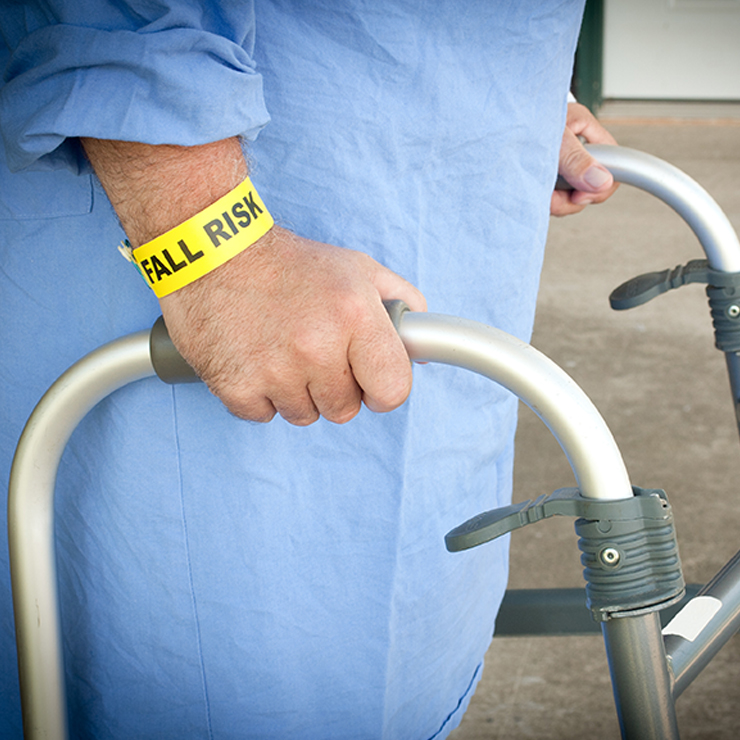
Falls offer another example of how rehabilitation expertise can support facility-wide goals. A fall should not automatically result in a therapy referral. However, rehabilitation can bring a valuable functional perspective to interdisciplinary fall reviews.
- Was there a change in balance?
- Did transfer ability decline?
- Is the resident using the appropriate device?
- Has wheelchair positioning changed?
- Is cognition affecting safety awareness?
- Does the resident have the physical ability to perform what he or she is attempting to do?
These questions can help the team move beyond simply adding another intervention after each fall. The goal is to understand why the resident fell and what functional factors may have contributed.
Starting Discharge Planning Earlier
Rehabilitation also has an important role in helping facilities move from a "discharge date" mindset to a discharge readiness mindset. Planning should not begin a few days before a resident leaves. Therapy can help identify equipment needs, caregiver training requirements, mobility barriers, and environmental concerns early in the stay. Those findings can then be shared with nursing, social services, and families while there is still time to address them. Whenever possible, rehabilitation should also extend beyond the controlled environment of the therapy gym.
Practicing bathroom mobility, uneven surfaces, community access, caregiver-assisted tasks, and other real-life challenges may reveal barriers that are not obvious during a routine treatment session. A resident's ability to walk 100 feet in a hallway is useful information. The goal is for them to function safely and meaningfully in real life.
10 Ways Any SNF Can Strengthen Rehabilitation Collaboration
None of this requires an elaborate new program. Many facilities can begin by strengthening systems and conversations that already exist.
Ten practical starting points include:
- Give the DOR a consistent role at the interdisciplinary table for clinical, operational, discharge, and quality discussions where function matters.
- Include rehabilitation in interdisciplinary fall reviews when mobility, balance, cognition, transfers, positioning, or equipment may be contributing factors.
- Create an accessible system for communicating functional levels, so nurses and CNAs understand residents' current transfer and mobility recommendations.
- Strengthen the therapy-restorative nursing connection to support continuity as residents transition from skilled therapy.
- Treat meaningful functional decline as an interdisciplinary trigger for communication and clinical review, recognizing that changes in function may signal a broader change in the resident's condition.
- Use therapists as frontline educators through brief, practical teaching on transfers, positioning, mobility, and supporting resident independence.
- Bring rehabilitation into discharge planning early, rather than waiting until the discharge date approaches.
- Practice real-life functional challenges, not only tasks performed within the therapy gym. Person-centered functional training can help the interdisciplinary team identify barriers that might otherwise emerge only after discharge.
- Review facility outcomes collaboratively, asking where mobility, cognition, and functional status may be contributing.
- Ask one simple question during leadership discussions: "Where can rehabilitation help?"
That final question may be the most important. Not every problem needs a therapy solution. But routinely asking the question encourages leaders to see rehabilitation as a clinical resource rather than an isolated department.
The Next Evolution of Rehabilitation
PDPM changed the relationship between rehabilitation utilization and reimbursement in skilled nursing. The next evolution may be less about payment methodology and more about organizational culture. Facilities should continue asking whether therapy is producing meaningful outcomes for individual residents. But perhaps skilled nursing leaders should ask another question as well:
- Is rehabilitation helping the entire facility become more functional?
- Is it helping staff understand mobility?
- Is it identifying functional decline earlier?
- Is it supporting fall prevention?
- Is it strengthening restorative nursing?
- Is it preparing residents and families for discharge?
- Is it helping residents maintain as much independence as possible throughout the day, not just during therapy?
 When the answer is yes, rehabilitation is doing more than providing treatment.
It contributes clinical insight, functional expertise, staff education, and interdisciplinary support to the organization as a whole. For skilled nursing leaders facing increasingly complex residents and increasingly complex operational challenges, that may be one of the most underutilized resources already inside the building.
What happens in the therapy gym rarely stays in the therapy gym. The greater opportunity is recognizing just how far that impact can reach.
Pradeepika Samagh, PT, DPT, MBA, CFPS, CCI, LNHA, RAC-CT, is director of rehabilitation and physical therapist at Auburn Oaks Care Center in Auburn, California. Her professional interests include rehabilitation leadership, interdisciplinary collaboration, fall prevention, functional outcomes, and expanding rehabilitation’s role as a clinical partner in post-acute and long term care.
Provider magazine includes information from a variety of sources, such as contributing experts. The views expressed by external contributors do not necessarily reflect the views of Provider magazine and AHCA/NCAL. Learn how to submit an article.