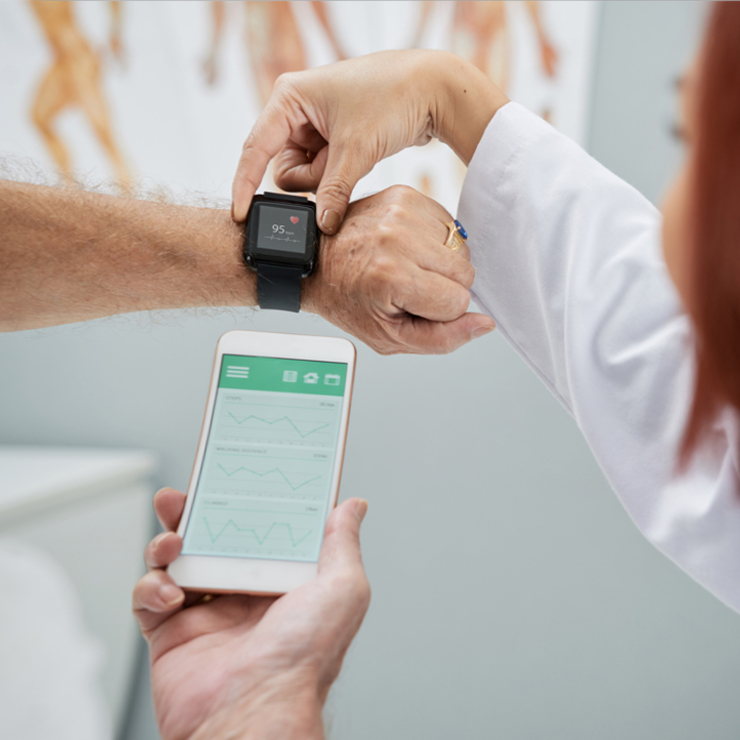
 Long term and post-acute care has always lived at the intersection of medicine, aging, and daily routine. Every resident brings a unique mix of chronic conditions, personal history, and day-to-day needs. Staff balance clinical complexity with daily schedules, and subtle changes often reveal themselves in small ways long before they become obvious problems. In this environment, catching early signs of decline is both essential and difficult.
In recent years, virtual care and wearable health devices have opened new possibilities by giving clinicians clearer visibility into residents’ health between visits. For the first time, long term care teams can see trends that were previously invisible: shifts in heart rate, nighttime oxygen levels, mobility patterns, and early signals of physiological stress. These insights offer a path toward more proactive and less crisis-driven care.
The Chronic Care Reality in Long Term Care
Residents in long term care often live with multiple chronic illnesses such as heart failure, COPD, diabetes, dementia, renal disease, and frailty. These conditions rarely worsen in dramatic episodes. Instead, they progress quietly:
- A small change in breathing.
- A few disrupted nights of sleep.
- Less movement or activity.
- Slight agitation or confusion.
- Irregular heart rate patterns.
These are early signs of decline, but they’re easy to miss when daily routines are full. Historically, the industry has relied on intuition, experience, and routine vitals. Those skills remain indispensable, but they alone can’t cover the growing complexity of residents’ needs.
Wearables and virtual care don’t replace clinical intuition— they extend it.
How Wearables Create Continuous Awareness
Modern wearables used in long term care settings are not consumer gadgets. They’re lightweight, discreet, and designed for older adults who may not tolerate bulky devices. They can monitor:
- Heart rate and variability.
- Oxygen saturation.
- Sleep cycles.
- Respiratory patterns.
- Steps and mobility.
- Gait changes.
- Restlessness or nighttime wandering.
- Indicators of stress or fatigue.
The true value isn’t a single reading of the trajectory. A resident may look fine at 8 a.m., but the data from the previous night may tell a different story.
These devices quietly create a baseline for each resident, allowing clinicians to see when someone is deviating from their normal pattern—often days before symptoms appear.
Virtual Care Turns Signals Into Meaningful Action
Data doesn’t help unless someone is responsible for interpreting it. Virtual care teams, remote nurses, physicians, and advanced practice providers bridge that gap. They monitor trends, review alerts, and coordinate with on-site staff.
A typical workflow may look like this:
- Residents wear a device that passively collects vital data.
- When the data deviates from baseline, an alert is generated.
- A virtual clinician reviews the trend and confirms whether it’s clinically meaningful.
- The virtual team contacts the facility to gather context.
- If needed, a virtual consultation happens the same day.
- Treatment adjustments, medication changes, hydration, breathing exercises, or closer observation are made quickly.
This process doesn’t disrupt staff routine; it strengthens it. Instead of scrambling during emergencies, teams can address issues while they’re still manageable.
Case Example 1: Preventing a Heart Failure Exacerbation
A resident with chronic heart failure begins showing a subtle rise in nighttime heart rate and a gradual drop in mobility over three days. Staff hadn’t noticed major symptoms yet.
A virtual nurse reviewing the data flags the trend and contacts the facility. After a quick assessment, the provider adjusts the resident’s diuretic dose and orders extra monitoring. Within 24 hours, the resident stabilizes, avoiding what could have been a hospitalization.
Case Example 2: Early COPD Detection Before an Emergency
A resident with COPD experiences small drops in oxygen saturation overnight, still within “safe” ranges but lower than their personal baseline. The wearable catches the change long before the resident feels short of breath.
A virtual provider evaluates the pattern, conducts a same-day virtual check, and adjusts inhaler use. The resident improves without needing an ER visit.
These small interventions add up: fewer transfers, fewer acute episodes, and more predictable care.
The Benefits for Long Term Care Providers
1. Fewer Avoidable Hospital Transfers.
Early intervention can prevent many common causes of hospitalization fluid overload, infection, respiratory decline, dehydration, and medication complications.
2. More Stable Workflows.
Instead of reacting to emergencies, staff can address issues earlier when they are easier to manage.
3. Better Clinical Documentation.
Continuous data provides objective evidence for care plans, surveys, and family conversations.
4. Stronger Family Confidence.
Families appreciate knowing their loved ones are monitored throughout the day and night.
5. Support for Staffing Challenges.
In periods of staffing shortages, virtual monitoring acts as an extra layer of awareness, reducing the burden on on-site teams.
Implementation Challenges and How to Avoid Them
Long term care facilities must consider several practical factors when adopting wearables:
- Choosing the Right Devices: Devices must be comfortable, durable, and suitable for older adults including those with cognitive impairment.
- Avoiding Alert Fatigue: Alerts need to be based on changes from each resident’s baseline, not rigid population-level thresholds.
- Training Staff: Clear roles are essential so staff know when to escalate concerns and when virtual teams will take the lead.
- Electronic Health Record Compatibility: Not all systems integrate smoothly; sometimes a middleware or dashboard is necessary.
- Resident Tolerance and Privacy: Consent, comfort, and respectful use remain central.
These challenges are manageable with thoughtful planning.
A New Model for Proactive Care
Long term care has always valued early detection, but until recently, the tools weren’t available to consistently support it. Wearables and virtual monitoring allow teams to shift from a reactive model responding to visible symptoms to a proactive one where subtle changes trigger early action.
This isn’t about replacing people. It’s about giving clinicians the information they need but didn’t have access to. It allows nurses to intervene earlier. It helps residents stay stable in the place they call home. It reduces stress for staff and supports better clinical outcomes without adding to their daily workload.
 As chronic disease becomes more complex and resident needs continue to grow, facilities need tools that help them stay ahead, rather than catching up. Virtual care and wearables are not a luxury; they are becoming a foundational part of modern long term care. They help the industry move toward a future where fewer problems escalate, fewer residents experience preventable decline, and more care is delivered before and not after crisis strikes.
Vaishnavi Gadve is a research-driven health care engineer specializing in advanced language models and data-driven clinical decision systems. She works across the full lifecycle of digital health solutions building scalable pipelines, designing intelligent prototypes, and applying predictive modeling to solve real problems in care delivery. She can be contacted at vaishnavigadve143@gmail.com.
Provider magazine includes information from a variety of sources, such as contributing experts. The views expressed by external contributors do not necessarily reflect the views of Provider magazine and AHCA/NCAL. Learn how to submit an article.