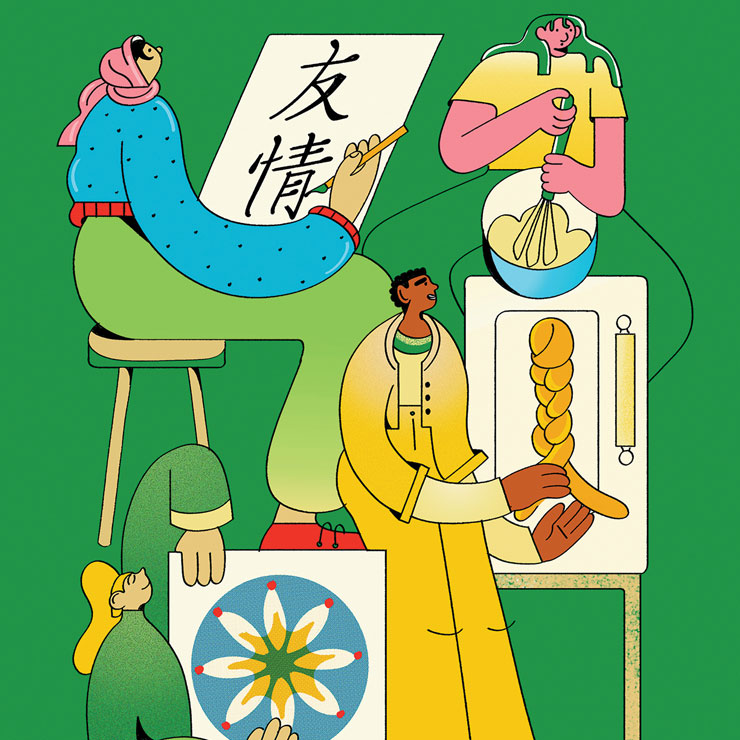
 The ability to embrace and celebrate one’s culture is important, including for nursing home and assisted living residents. Like so much in long term care communities, cultural appreciation and observance calls for a team effort that involves everyone—residents, families, and staff. Enabling residents to carry on with traditions, diet, language, and other elements of culture is key to person-centered care and contributes significantly to quality of life and engagement.
The Move toward Cultural Competence
“Cultural competence” has become increasingly important as the United States population has become more diverse. The term generally refers to one’s ability to adequately understand, respect, and address residents’ cultural, social, and linguistic needs. This means identifying and respecting differences and addressing how they might impact care and services; providing identified services to support cultural needs; integrating language and cultural needs into care; and ensuring staff have the skills and knowledge to work and communicate with all residents, regardless of their cultural or linguistic differences.
Supporting Russian-Speaking Older Adults
Boston has the largest Russian-speaking population in
Massachusetts, and the Russian Bilingual Services Program at Hebrew
Rehabilitation Center is a valuable resource for Russian-speaking
seniors in the region. It provides services including cultural and
linguistic comfort; support and a sense of community; long term care
services, such as Medicare-certified home health care and assistance
during surgical recovery; specialized care with staff who are fluent in
both English and Russian; and community events.
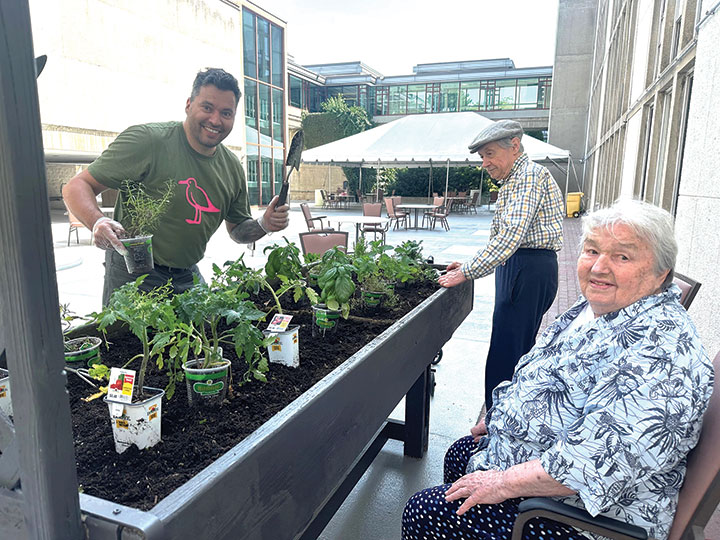 |
Residents and staff create a garden at the Russian Bilingual Services Program at Hebrew Rehabilitation Center.
|
Alexandra Dashevskaya, Russian Bilingual Services Program director, said, “When we started this program, the goal was to create a support system for people whose first language is not English. In this case, their primary language was Russian. We wanted to provide them with equal access to health care services unhindered by language barriers.”
Language is central in everyday life, Dashevskaya stressed, and it can impact access to health care, treatments, and outcomes. However, it is not enough to learn a language; it is important to understand the patient’s background in terms of cultural preferences, Dashevskaya said.
She noted, “Residents feel more engaged if they see that the provider understands their needs and preferences. A trust relationship is important and contributes significantly to better treatment and outcomes.”
Of course, cultural competence is not just about health care. Dashevskaya said, “We have a special department that arranges activities such as concerts, games, opera, and poetry for Russian-speaking seniors. Being with a group in a socially appropriate environment—with things like paintings on the wall that remind them of their childhood—makes residents feel more comfortable and at home.”
While this bilingual program is popular, Dashevskaya noted that its success didn’t happen in a vacuum. Russian-speaking people from the community at large are volunteers. This adds to the richness, breadth, and authenticity of the program, and it has created a powerful word of mouth.
“Everyone knows about us, and we have created a sustainable brand that successfully serves our Russian-speaking older adults,” she said.
The program isn’t valuable just for residents and staff. Dashevskaya said that it also provides peace of mind for families. Because of the bilingual program, they can feel confident that their loved one is being cared for in a setting where their cultural preferences and language are understood and respected.
We are likely to see the development of more such programs moving forward. Dashevskaya stressed that individuals who don’t speak English as their primary language are more common than one might think. This is generally referred to as limited English proficiency, and the U.S. Census Bureau reports that nearly 10 percent of the U.S. population over age five fits into this category.
Rehab Where It Feels Familiar
Dassy Schechter, vice president of marketing and business development at Paramount Care Centers, observed that when people need rehabilitation after a stroke, surgery, or another medical issue, where they get this care makes a difference. That is why there are dedicated units for patients of various cultures, including Orthodox Jewish and Chinese.
Being in an environment where traditions and values are respected impacts outcomes, Schechter agreed, noting, “Families have told me that their mom or dad refused to participate in rehab because they were feeling so disconnected. Here, they’re connecting with people their own age who have similar backgrounds and are facing the same challenges. They can practice their familiar routines and customs. They almost instantly feel better.”
People will travel many miles to go to a Paramount Care Center because, while they may be able to get quality rehab services elsewhere, they want a facility that attends to their cultural, linguistic, and dietary needs, as well.
For example, the Jewish unit is based in Lakewood, New Jersey, which has a high population of Orthodox Jews. In addition to kosher foods, patients have access to a synagogue where cantors come to deliver services, rabbis visit to provide lectures and educational programs, and there are special programs for the holidays.
Staff prioritize patients’ desire to stick to their routines. For instance, the Lakewood facility holds services where residents can light candles to welcome the Sabbath. The facility also enables residents to easily observe the Sabbath, including by providing appropriate foods.
As family is an important part of Jewish holidays, patients can miss intense family time when the holidays come. Therefore, the Lakewood facility enables family members to participate in services, meals, and other activities. Sleeping space in nearby guest apartments where families can stay is also provided.
Part of the reason for the unit’s success and popularity, Schechter observed, is that its director is Jewish and understands what patients and families are looking for in a rehab setting and knows exactly how to meet their needs.
Aging in Alaska
“We serve twenty-seven different communities in Southeast Alaska, and we have a very large Alaska Native population,” said Kay Turner, PT, DPT, LNHA, administrator of Sitka Long-Term Care, Wrangell Long-Term Care in Alaska. Yet while the geographic footprint is large, the population is relatively small, and facilities often feel like family.
Turner explained, “It’s a place where staff and residents have known each other for years. We even have staff whose family members are residents.” At the same time, she said, “we recognize that we’re on Native land, and there’s a land blessing at the start of each community meeting to acknowledge and respect that.”
Turner’s community celebrates Native Alaskan culture in many ways. For example, different Native dance groups, which include students from area schools, are invited to perform for residents. She noted, “There are many different Native tribes in Alaska, so our residents come from multiple backgrounds and have different styles of dance. But we try to provide a variety of dance programs and events, and our residents seem to enjoy them.”
Intergenerational engagement is important both to residents and young people in the community at large. Turner noted, “A local boarding school dance group enjoys getting to spend some time with some elders. Some will learn and speak their traditional tribal languages.”
This is so important, she observed, as it passes these languages on to a new generation. If students want to learn a language, they can meet with a resident who speaks it.
“It’s so good for our residents to have these connections with the younger generation. They have so many traditions and wonderful stories to share,” Turner said.
As these intergenerational engagements demonstrate, connection with the community is key. Turner said, “We participate when there’s a totem pole raising or carving in the area. We bring residents on outings so they can be part of these events.”
Turner and her team understand that there is also a significant Russian influence in the area, and a number of residents are Russian Orthodox. As a result, they celebrate both traditional Christmas, as well as Russian Orthodox Christmas.
Cultural Care in Paradise
A small percentage of residents at The Plaza Assisted Living in Hawaii are Hawaiians, yet many residents have lived in the region for a while and embraced Hawaiian culture. Tricia Medeiros, COO, and her team at The Plaza work to ensure all residents feel at home and can celebrate their cultural traditions and tastes.
The Plaza promotes Hawaiian culture in many ways. Among them, a celebration is held during which a court is appointed, with a couple representing each Hawaiian island. Then two people are declared king and queen of May Day, and there is music and authentic hula dancing.
“This is the kind of celebration our people are used to seeing in the community at large,” said Medeiros, so it is familiar and resonates with them.
Medeiros explained, “We often have Hawaiian music playing, and there are many hula performances—some planned and others spontaneous. Music and dance are a big part of our culture, so they are very evident at our properties.”
The Hawaiian culture is ingrained in many aspects of care and life at The Plaza. For instance, Medeiros said, “we call our memory care units Hali‘a, which means ‘cherished memories’ in Hawaiian. We also created an extended care unit, which we call Lamakū, which is associated with wisdom and guidance and is a word that means a lot to people here.” Flowers are very meaningful to Hawaiians, so The Plaza chose a purple orchid as the symbol for Hali‘a and the torch ginger for Lamakū.
Medeiros noted that Hawaii is a melting pot of different cultures, and this is reflected at The Plaza. For example, she pointed out that about three-fourths of the facility’s population is Asian, predominantly Japanese, and the facility celebrates Japanese culture.
“We always have ozoni, a mochi soup, on New Year’s Day, which is a Japanese tradition deemed to bring luck into the new year. We have dances to celebrate Boys’ Day and Girls’ Day, another popular tradition, and we have a Japanese singing club.” Also, many residents play hanafuda, a popular Japanese card game.
On Their Land: Caring for Native Americans
Ninety percent of the residents at Winslow Campus of Care in Arizona are Native Americans. The Navajo, Laguna, and Hopi tribes are all represented. Cathy Williams, CEO, and her team work to make sure they understand, respect, and serve the needs and preferences of all the residents.
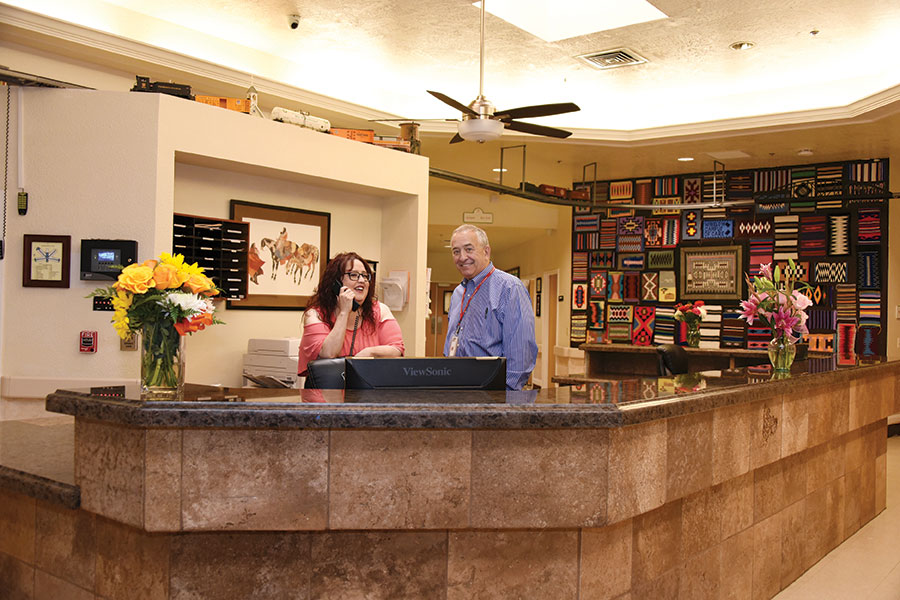 |
The Rug Wall at Winslow Campus of Care in Arizona.
The rugs were made by residents to honor their environment and culture.
|
Native American traditions and rituals are deeply significant to the residents, and Williams and her team are eager to support them. She said, “We have a gazebo in our courtyard that we use for many celebratory occasions, and we had a powwow there once. We have Native American dancers who come into our facility throughout the year.” Medicine men come in every month, prayer sessions with residents are held, and building blessings are performed.
At certain times of the year during the full moon, it is traditional to have complete darkness for a period of time. So the building team makes sure blinds and curtains are closed. Some tribes have specific practices around bathing, and the team works to identify those residents and comply with their observances. Some tribes request that, after a resident dies, the decedent’s room not be reassigned for three days so the spirit can be released, and it is often requested that the room’s window stay open during that time. As some of these efforts may be unique or even contrary to common nursing home protocol, it is important to document resident wishes and the reason behind various actions.
Dining Differences
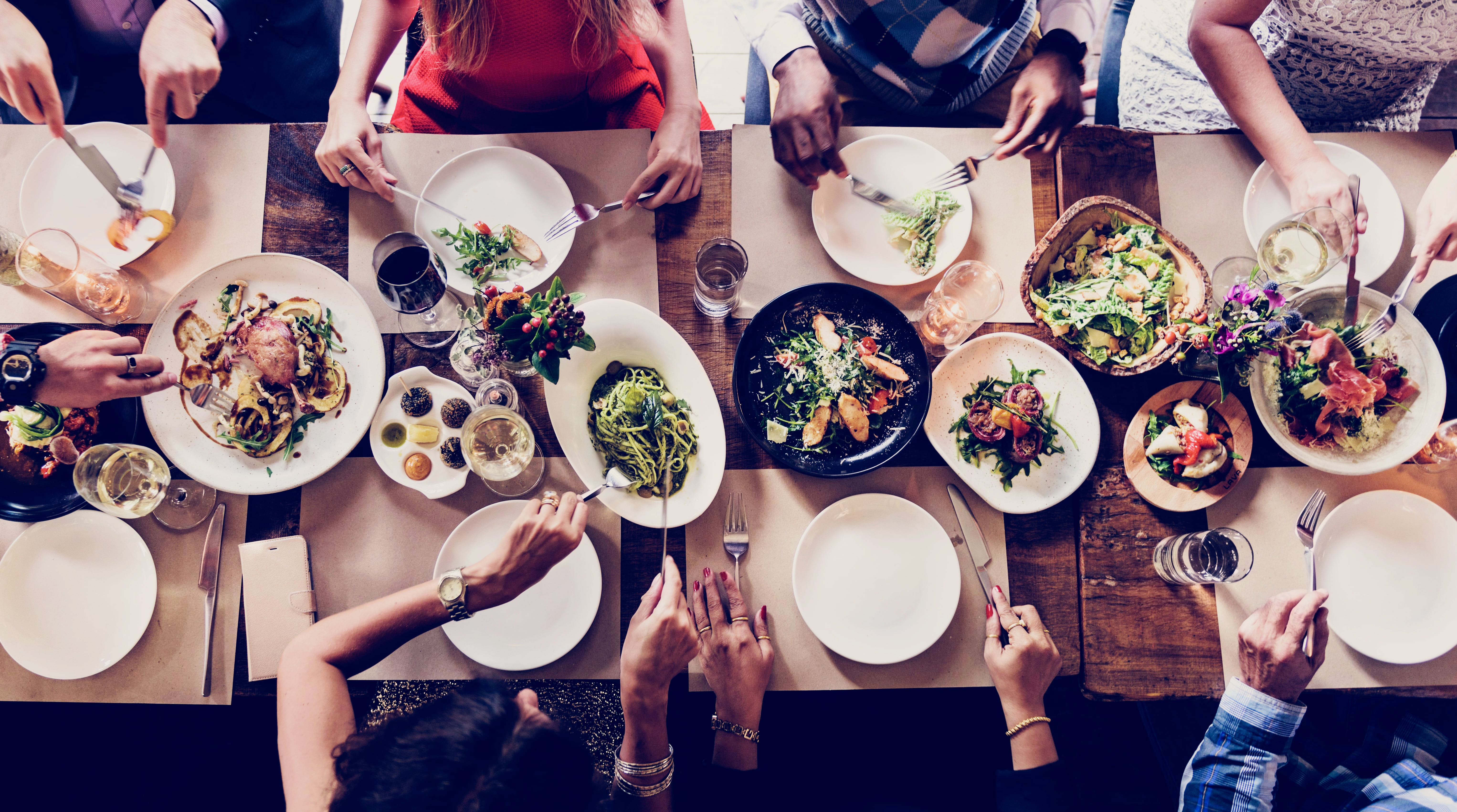
Food and meals are key to one’s culture, so communities need to consider what types of dishes will appeal to residents. Just as care needs to be person-centered, so does dining.
 Turner said, “Much of our lives revolve around meals and food, and they are big part of culture. We offer Native foods for residents. For instance, they are used to eating lots of fish, so we arrange for things like salmon, halibut, and crab. We get herring eggs when they’re in season.”
She added that cooking and the aroma of foods is an important part of Native Alaskan culture, so her facility has an activities kitchen where residents and staff can prepare and cook foods together. It opens to a living room, so those who can’t participate in the cooking can still smell the food and be part of the meal preparation.
On Fridays, The Plaza holds a Hawaiian luau with foods such as pork kalua and haupia (Hawaiian coconut pudding). Many of the chefs are Hawaiian born and raised, so they have prepared and eaten these foods their whole lives. Medeiros said, “We also incorporate Japanese food in our menu, such as miso soup, salmon salad, mochi, and tsukemono [pickled vegetables].”
In Arizona, Winslow Campus residents always have access to the foods that are part of their culture and are familiar and comforting. For instance, Williams said, “blue corn mush is a staple on our menu and is available every day at every meal. We also offer fried bread, and mutton stew is on the meal rotation.”
The community’s dietary supervisor does an annual sheep carving. This, Williams said, is an important popular tradition, packing the dining room with residents and family members alike.
Surroundings Can Touch Hearts, Memories
The environment of a building can go a long way toward creating a familiar, homelike feeling for people of various cultures. For example, the average height of Japanese individuals is five feet, seven inches for men and five feet, two inches for women, so these residents might appreciate amenities such as lower chairs and tables.
Turner shared that her facility in Alaska displays Native art throughout. Connection to nature and the outdoors is also valued by her residents, so they’re able to enjoy views of the ocean and Mount Edgecumbe from an expansive bank of windows. Additionally, floor-to-ceiling wall art made of lush greenery has been installed. “It helps bring the outside in and incorporate elements of our natural environment,” Turner explained.
Medeiros said, “Familiarity increases comfort and engagement.” That is why some of the buildings at The Plaza are reflective of the architectural style common in Hawaii. One property features a Japanese-style teahouse, and zen gardens are popular. Inside and out, buildings have traditional Hawaiian- and Asian-style design elements to harmonize with the environment. Medeiros stressed that these buildings are more comfortable and familiar for residents, as opposed to buildings designed in a traditional Western style.
Meeting Spiritual Needs
Rabbi Daniel Braune-Friedman, director of spiritual life and senior rabbi at Charles E. Smith Life Communities (CESLC) in Maryland, helps ensure that more than 1,100 older adults in post-acute and long term care, independent living, assisted living, and memory care receive the spiritual comfort and connections they need. Although it is a Jewish faith-based organization, CESLC offers religious and spiritual programming for people of all faiths.
Staff Engagement Matters, Too
Encouraging staff to learn about residents’ cultures so they can enjoy mutually respectful relationships is essential. For instance, learning how to greet residents in their native language or recognizing holidays or special events they celebrate can help build trusting relationships and make residents feel seen and heard.
“We provide our associates with education about Jewish holidays and what makes them unique,” Rabbi Braune-Friedman shared. “We create awareness so they can engage with residents and provide unique programs that will resonate with our residents.”
He added that new associates undergo an orientation that includes information about holidays, Jewish traditions, and what “kosher” means and why it is important.
To ensure residents enjoy a rich, engaging experience that attends to their cultural and spiritual needs, Rabbi Braune-Friedman and his team partner with others in the community. For instance, he said, “we work with the local rabbinical council. They have their own set of rabbis and kosher supervisors, and they send us people who can check our production line to ensure food preparation and service is strictly kosher.”
Rabbi Braune-Friedman said that, additionally, he is “blessed” with a group of volunteers to meet the spiritual needs of all residents. They include a Christian volunteer who holds a class once a week. A local Catholic church sends Eucharistic ministers to deliver communion every other week. These partnerships enable the rabbi and his team to help residents continue participating in traditions and services that are important to them, especially when they are unable to travel to their own synagogues or churches.
Cathy Williams at Winslow Campus of Care in Arizona agreed that it is essential for staff to understand the significance of traditions. “For some tribes,” she explained, “we’re not supposed to cut their hair at certain times of the year. If I walk into the facility and the charge nurse says that certain residents need haircuts, that team member needs to understand why we can’t just put them on the list to get their hair cut.”
Staff orientation and education is key, especially when there are so many important traditions and rituals to honor, Williams suggested. While many of Winslow’s staff are Native Americans, they haven’t all had the same exposure to the culture as their elders. Therefore, orientation includes information about the various traditions, needs, and requests of residents, and staff learn that there are translators available if they need them.
Training and education not only help staff provide quality care; they can improve relationships, increase trust, and make mutual respect a hallmark of every day. It can make a difference in how residents, families, and staff alike feel about the community.
Joanne Kaldy is a freelance writer and communications consultant based in New Orleans.