
Thirty years ago, the American Health Care Association/National Center for Assisted Living (AHCA/NCAL) National Quality Award Program was established and set out with an ambitious goal: not simply to recognize excellence in long term and post-acute care, but to help providers build it.
Since its launch in 1996, more than 8,000 skilled nursing centers and assisted living communities have embarked on the Quality Award journey. What began as an innovative application of the Baldrige Excellence Framework has evolved into the profession’s most respected and widely used quality-improvement program—a nationwide program that has shaped organizations, developed leaders, and improved care for older adults and individuals with disabilities.
Today, the program’s impact is measured by more than just the Bronze, Silver, and Gold awards presented each year. Decades of performance data show that Silver and Gold Quality Award recipients consistently achieve better outcomes than their peers, such as higher Five-Star ratings, lower staff turnover, and better outcomes in quality-performance measures.
More Than an Award
Long before the first award applications were submitted, Baldrige expert Mark Blazey was helping design what the program would become. Blazey—who helped develop the program’s original scoring calibration guidelines, trained examiners for more than a decade, and served as a judge and member of the Quality Award Board—said the program’s greatest innovation was its focus on development rather than recognition alone.
“Baldrige recognized organizations that had already achieved excellence,” Blazey said. “The AHCA/NCAL program was designed to develop excellence.”
That philosophy became the foundation of the program’s three progressive levels: Bronze, Silver, and Gold (formerly Step I, Step II, and Step III, respectively). This allowed providers to build organizational maturity one step at a time. Blazey believes this structure is the reason the program has endured for three decades.
“The organizational profile required at Bronze may sound simple,” he said, “but it forces organizations to think through why they are in business, what they want to achieve, what is critical for success, and what the customers want. Those conversations become the first step toward long-term improvement.”
Throughout his involvement, Blazey focused on ensuring the evaluation process remained rigorous, fair, and consistent. He developed the scoring calibration guide, still used today, to increase examiner consistency and worked to align program policies with the Baldrige framework. He considers the AHCA/NCAL National Quality Award Program to be one of the most effective Baldrige-based initiatives in the world.
“What impressed me most wasn’t just the applicants,” Blazey said in retrospect. “The program itself continuously improved. The staff used the same quality principles internally that they asked providers to use. That’s why the program has lasted.”
.jpg)
Not a Finish Line
For providers, the Quality Award Program quickly becomes much more than an application.
Allan Engelauf, chief executive officer of Vista Pacifica Enterprises, began his organization’s journey in 2014 after seeing another California provider achieve Gold and being motivated to become a top organization in the state. Over the next several years, his independently owned, two-building organization progressed through Bronze and Silver and ultimately earned the Gold Award in 2019 on its first attempt.
“We were a good organization when we started, but the journey to Gold changed our standards,” Engelauf said. “It made us look in the mirror at areas where we were weak and really made us raise the bar for ourselves. It changed how we thought about systems and how we continuously improve.”
For Engelauf, earning Gold wasn’t the finish line; it was an invitation to give back.
“Right after we won the Gold in 2019, I started as a Gold examiner in 2020,” he said. “I felt like after spending six years learning the criteria, I didn’t want that knowledge to stop with us. Serving as an examiner allows me to help other organizations grow the same way we did.”
For Engelauf, giving back was the natural next step. After spending years learning from examiners and applying their feedback, becoming an examiner himself allowed him to complete the circle—helping other providers navigate the same journey that transformed his own organization.
Thirty years after the program’s launch, Engelauf’s story represents one of the program’s greatest legacies: providers who complete the journey return to help guide the next generation of applicants, ensuring the culture of continuous improvement remains for years to come.
Building Better Systems
That same theme resonates with Tawnya Dennis, administrator of Lofland Park Center in Seaford, Delaware. The center earned the Gold Award in 2024, and Dennis now serves as both an examiner and a member of the Quality Award Board.
She first learned about the program at a state association educational seminar and immediately recognized its potential. Beginning with a Bronze Award, which Lofland Park earned in 2016, Dennis steadily guided her organization through the program while simultaneously serving as an examiner. Along the way, she credits the framework with preparing her organization for significant federal regulatory changes.
“When the QAPI [quality assurance and performance improvement] regulations became more robust, we already had those systems in place because of the Quality Award Program,” Dennis said. “We understood it wasn’t about having another meeting—it was about building systems that drive success.”
Perhaps even more valuable than the recognition itself, Dennis said, is the detailed examiner feedback organizations receive after each application. After an unsuccessful Gold application, her team carefully studied the feedback report, strengthened key systems, and ultimately earned Gold the following year.
“The feedback report is invaluable,” she said. “It tells you exactly where you need to improve. If you’re willing to listen and make the changes, it becomes your road map.”
For Dennis and her team at Lofland Park, that sentiment continues long after receiving the Gold recognition.
“The journey never really stops,” she said. “You achieve Gold, but continuous improvement doesn’t end there. The Quality Award Program becomes the way you operate.”
30 Years and Still Improving
If anyone has witnessed the evolution of the National Quality Award Program, it’s Cathy Bergland.
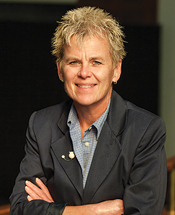 After serving as an examiner, trainer, judge, consultant, and now Quality Award Board Chair, Bergland has spent more than a decade helping shape the program and watching hundreds of organizations progress from Bronze to Silver, and an elite few to Gold. For Bergland, the program’s longevity isn’t accidental. It has thrived because it was designed to help providers continuously strengthen their organizations.
“What I love most is the developmental nature of the program,” Bergland said. “It doesn’t ask organizations to become exceptional overnight. It helps them build that capability one step at a time.”
Bergland said some of the most inspiring organizations are those that return to the program after already achieving Gold, not because they need another award, but because they remain committed to becoming better.
“The strongest organizations continue to evaluate themselves, challenge themselves, and reengage with the framework because they know improvement never stops,” Bergland said. “I don’t really think of it as an application. It’s a management document. When it becomes the way you lead your organization—not just a paper you write—it is a framework to improve care and services every single day.”
But Bergland believes the real reason for the program’s success is the people behind it. Thousands of volunteer examiners, judges, mentors, and board members have dedicated countless hours over the past thirty years to helping providers improve. That commitment remains the program’s greatest strength.
 “Where would this program be without this army of volunteers?” she said. “As board chair, I can’t help but say a huge thank-you to all those volunteers.”
Because, in the end, the National Quality Award Program has never been about just earning an award; it’s about people helping people deliver better care.
Cristina Walls is senior manager, public affairs at the American Health Care Association/National Center for Assisted Living.