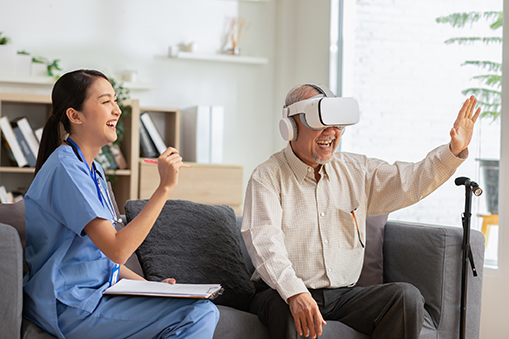
 Artificial intelligence (AI) is quickly becoming a practical tool in nursing homes and assisted living communities. For physical therapists (PTs), occupational therapists (OTs), and speech-language pathologists (SLPs), AI is supporting more personalized, efficient, and proactive rehabilitation by automating documentation, analyzing movement and speech, identifying residents at risk for functional decline, and adapting treatment in real time.
Rather than replacing clinicians, AI is helping them make better-informed decisions while reducing administrative burden and creating more time for direct resident care. Although AI applications are still emerging, research supporting their use continues to increase, making now the right time for providers to begin preparing.
Start with Your Mission, Not the Technology
Successful AI implementation begins by identifying the problem to solve, not by selecting the newest technology. Organizations should first determine whether they want to reduce documentation time, improve therapy outcomes, detect functional decline earlier, reduce falls or hospitalizations, or increase resident engagement. Different priorities require different AI solutions.
Providers also need an adequate digital foundation, including interoperable electronic health records, reliable connectivity, cybersecurity protections, quality data, and staff training. Collaboration among therapists, nurses, physicians, administrators, IT staff, and compliance professionals is equally important. Pilot projects with measurable outcomes—such as documentation time, clinician satisfaction, resident outcomes, and return on investment—allow organizations to evaluate new technologies before broader deployment.
Beginning with organizational goals instead of technology helps ensure AI strengthens resident care rather than becomes another disconnected software platform.
AI Is More Than Chatbots
While generative AI tools such as ChatGPT receive the most attention, rehabilitation is benefiting from a much broader range of technologies. Today's rehabilitation teams are beginning to use an array of tools:
- ambient AI documentation
- wearable sensors
- computer vision and motion analysis
- predictive analytics
- virtual reality
- conversational coaching tools
- speech recognition
- clinical decision support
- remote monitoring
- robotics and smart assistive devices
Together, these technologies are transforming assessment, treatment, monitoring, documentation, and care planning. Therapists remain responsible for every evaluation and clinical decision; AI simply provides better information and more-efficient tools.
AI Is Reducing Documentation Burden
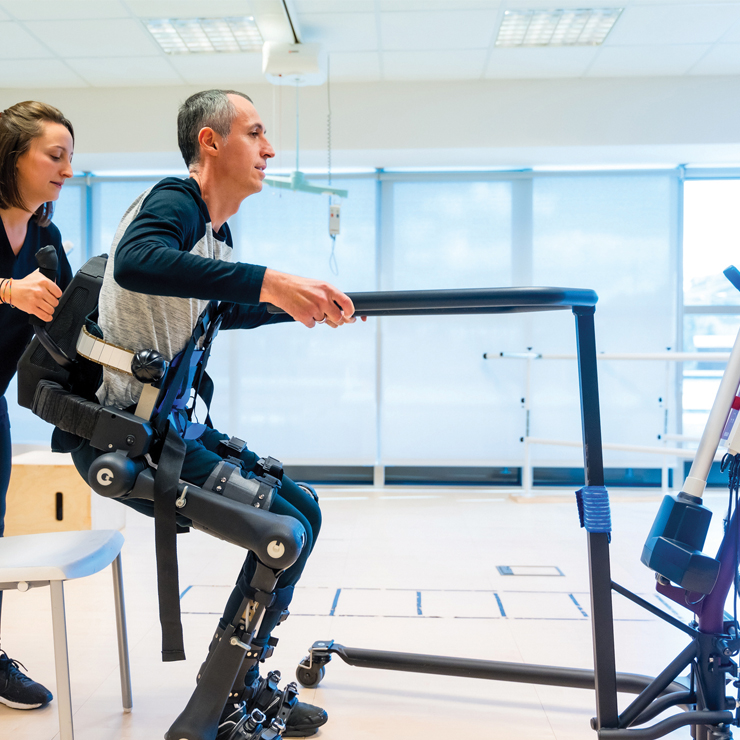 One of AI's most immediate benefits is reduced documentation time. Ambient AI systems can generate clinical notes during evaluations and treatment sessions, allowing therapists to review and approve documentation rather than create it from scratch. Early studies suggest these tools reduce after-hours charting, lessen administrative burden, improve documentation quality, and allow clinicians to spend more face-to-face time with residents.
How AI Is Expanding Rehabilitation
Researchers are finding discipline-specific applications for AI while also demonstrating benefits that span rehabilitation practice.
- Physical therapy: Computer vision systems analyze gait, posture, balance, and joint movement, while wearable sensors monitor exercise performance and provide real-time feedback. AI-powered coaching tools can encourage residents to complete prescribed exercise programs between therapy sessions.
- Occupational therapy: AI helps therapists evaluate functional performance by analyzing activities of daily living using wearable devices and environmental sensors. These tools may detect subtle functional changes earlier and support more individualized treatment planning.
- Speech-language pathology: Machine learning is being used to analyze speech characteristics, monitor communication disorders over time, and support therapy through automated scoring, adaptive exercises, and personalized treatment materials.
Across all three disciplines, AI serves as a clinical support tool, not as a replacement for therapist expertise or judgment.
Virtual Reality Is Becoming Smarter
Virtual reality is emerging as one of the most promising AI-supported rehabilitation technologies. Residents recovering from stroke or orthopedic injuries or who have Parkinson's disease or cognitive impairment can practice walking, balance, communication, daily activities, and cognitive exercises in immersive environments that automatically adjust difficulty based on performance. Beyond formal therapy, virtual reality is also being used for reminiscence therapy, virtual travel, pain management, fall-prevention training, cognitive stimulation, and social engagement programs that enhance quality of life.
AI Beyond the Therapy Department
AI is also improving rehabilitation by monitoring residents outside therapy sessions. Wearable devices, smart beds, remote monitoring systems, and predictive analytics continuously track mobility, sleep, vital signs, and activity patterns. Combined with electronic health record data, these technologies can identify residents at increased risk of falls, skin breakdown, hospitalization, cognitive decline, or functional deterioration, allowing rehabilitation teams to intervene earlier. AI is also supporting care planning, medication management, telehealth, clinical decision support, and administrative automation, strengthening collaboration across the interdisciplinary care team.
Keeping People at the Center
As AI adoption accelerates, providers should remember that technology exists to support their mission, not define it. Successful implementation requires strong governance, transparency, cybersecurity, privacy protections, staff education, and ongoing evaluation. Organizations should understand how AI recommendations are generated, monitor systems for bias and accuracy, and ensure resident information remains protected.
Most importantly, clinicians remain accountable for every clinical decision. AI can summarize information, recognize patterns, and generate recommendations, but licensed professionals must always interpret those insights within the context of each resident's goals, preferences, and needs. The most successful organizations will use AI as another clinical tool that enhances compassionate, person-centered care rather than replaces it.
Looking Ahead
 Artificial intelligence is rapidly becoming another tool in the rehabilitation toolbox. Whether generating documentation, measuring gait, analyzing speech, personalizing virtual reality therapy, or identifying residents at risk before problems develop, AI is helping rehabilitation professionals work more efficiently and intervene earlier.
The future of rehabilitation isn't about choosing between technology and people. It's about using technology wisely to reduce administrative burden, strengthen clinical decision-making, and give therapists more time to help residents achieve greater independence, function, and quality of life.
For nursing homes and assisted living communities, that may be AI's greatest promise: not to replace human care, but to give caregivers the information they need—and more time—to better provide it.
Daniel Ciolek is associate vice president of therapy advocacy for the American Health Care Association.