 It's no secret that the Baby Boomers have changed the cultural landscape of the United States since their first arrival following WWII. The generation that caused rapid growth in suburbs and school districts and later in adulthood influenced business and industry, is now an aging population who will once again influence services meant for seniors.
Boomers today are roughly between the ages of 62 and 80 and are looking to downsize from the homes where they raised their families and move into senior living facilities, where maintenance is handled for them, safety features are adapted specifically for their needs, and a community is at the ready to welcome them in.
Because of this steady and growing trend, senior living facilities are becoming more popular. Research conducted by NIC, shows that a combination of high-demand facilities and limited new construction drove occupancy across all senior living property types in the fourth quarter of 2025. Independent living occupancy was above 90 percent, and assisted living occupancy was 87.7 percent.
Senior living properties that are able to meet this demand by quickly turning over units and placing new residents in vacant apartments will not only provide excellent customer service in an industry where wait lists can be long, but will also positively impact their bottom line. Quickly filling vacant apartments means less gaps in revenue.
Standardization Is Key
The key to success is standardization. The ability to turn over units is not just a customer service issue, helping seniors move into their new home more quickly, but also a business issue—the faster senior living communities can turn over vacated units, the better for the bottom line. Facilities managers should focus on standardizing the turnover process to eliminate redundancies. Using a checklist for all unit turns ensures all elements are addressed, eliminates guess-work, and keeps the team working as efficiently as possible.
Maintenance
As soon as a unit is vacated, the facilities team should conduct a thorough inspection to determine any maintenance that needs to be completed. One technique standardizes property inspections by having the team take a systematic approach by starting at the front door and following the left wall completely around the unit as a way to ensure 100 percent of the property is inspected and all needed repairs are identified. This reduces the need for multiple return trips to the unit.
Not only does this ensure a thorough sweep of the unit but inspecting units for repair the same way each time helps create an efficient system to identify any potential issue.
Safety
Every property manager should use a checklist to inspect the safety items needed in each unit to prepare for the next tenant. The facilities team should:
- Ensure smoke detectors and carbon monoxide detectors are functioning properly.
- Check that a fire extinguisher is available in the kitchen and still current.
- Ensure all appliances are working.
- Test unit’s intercom system to ensure next resident can reach out in an emergency.
- Confirm non-slip surfaces are still in place and functional.
- Make sure grab bars in bathrooms and other key areas are secure.
Aesthetics
It is important that facilities managers remember that their teams aren’t just turning over a unit for the next resident—they are preparing a property that will become someone’s home. The look and feel of the space are important factors that drive demand for senior living properties. Baby boomers don’t want to leave their long-term residences for sub-par apartments. Small details like the quality of the carpet and the look and feel of the kitchens and bathrooms make large impacts on future residents.
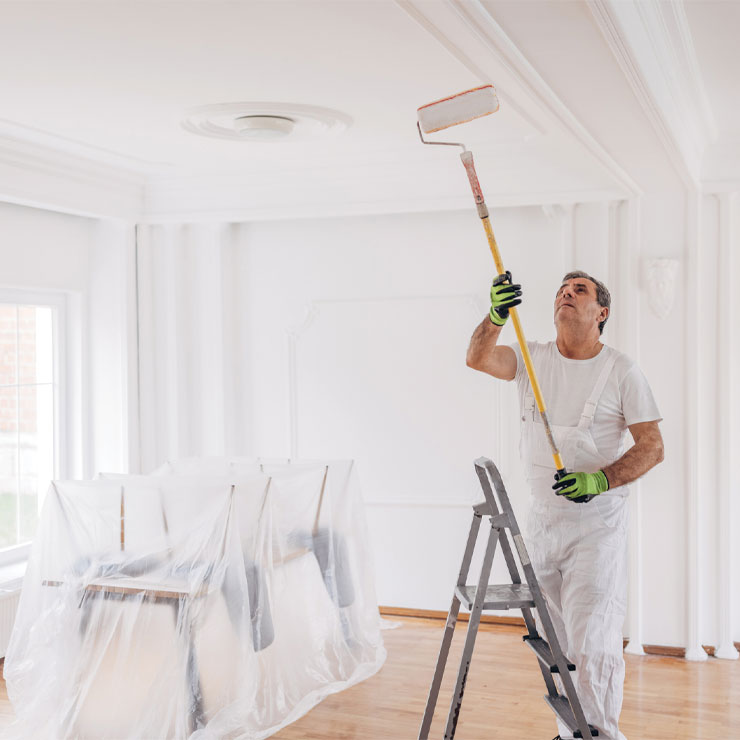
It is not unusual to need to replace carpeting and other flooring between tenants. It is important to choose durable materials that are quickly available and easy to install. High-quality vinyl flooring and stain resistant surfaces extend the lifespan within the unit. One of the most common refreshes in unit turns is repainting. It is one of the easiest ways to give a space a total facelift, making the unit look fresh, new, and ready to become a home.
Leaning on Technology for Efficiency
Facility managers work with many vendors to quickly turn over units. Today, it is becoming more common for service vendors to leverage technology to automate the administrative tasks associated with the job—pricing, scope of work and contracts can all be managed using automation.
Working with technology enabled vendors, like plumbing, electrical, flooring installation, or paint contractors with easy-to-use apps for booking, helps streamline workflows and ensure units can be quickly turned over for the next occupant.
Here is how it can work for painting vendors: the facilities manager works with the painting contractor to enter the schematics for each unit into the automated system. Pricing for the standard scope is agreed for each unit type, based on layout, number of bedrooms, and detail work that might be an add-on or vary by unit. When it comes time for one or more units to be painted, the facilities manager simply selects the location, the scope of work needing to be painted, and date for completion.
The system instantly alerts the paint contractor’s project manager, contracts are auto-generated, and a crew is scheduled and can be onsite within days—often as fast as within 24 hours. Working with service vendors that use technology to automate the administration of paperwork, estimates, work orders, and contracts means that units can be quickly repaired, refreshed, and maintained in a streamlined manor that ensures the next tenant is able to move in quickly.
The Bottom Line
 Baby Boomers are driving demand for senior living facilities. The locations that offer a luxurious ambiance will be highest in demand, with potentially long wait lists. Facilities managers can have lasting impact on the property’s bottom line by quickly and efficiently turning over units between residents. Using standardized processes and checklists will ensure streamlined maintenance, safety, and ambiance management. Partnering with vendors that have invested in technology to streamline the administrative side of work orders will ensure that units are turned quickly and ready to become home for the next resident.
Rich Kilgannon is the president and CEO of Arch Painting.
Provider magazine includes information from a variety of sources, such as contributing experts. The views expressed by external contributors do not necessarily reflect the views of Provider magazine and AHCA/NCAL. Learn how to submit an article.