ADVERTORIAL
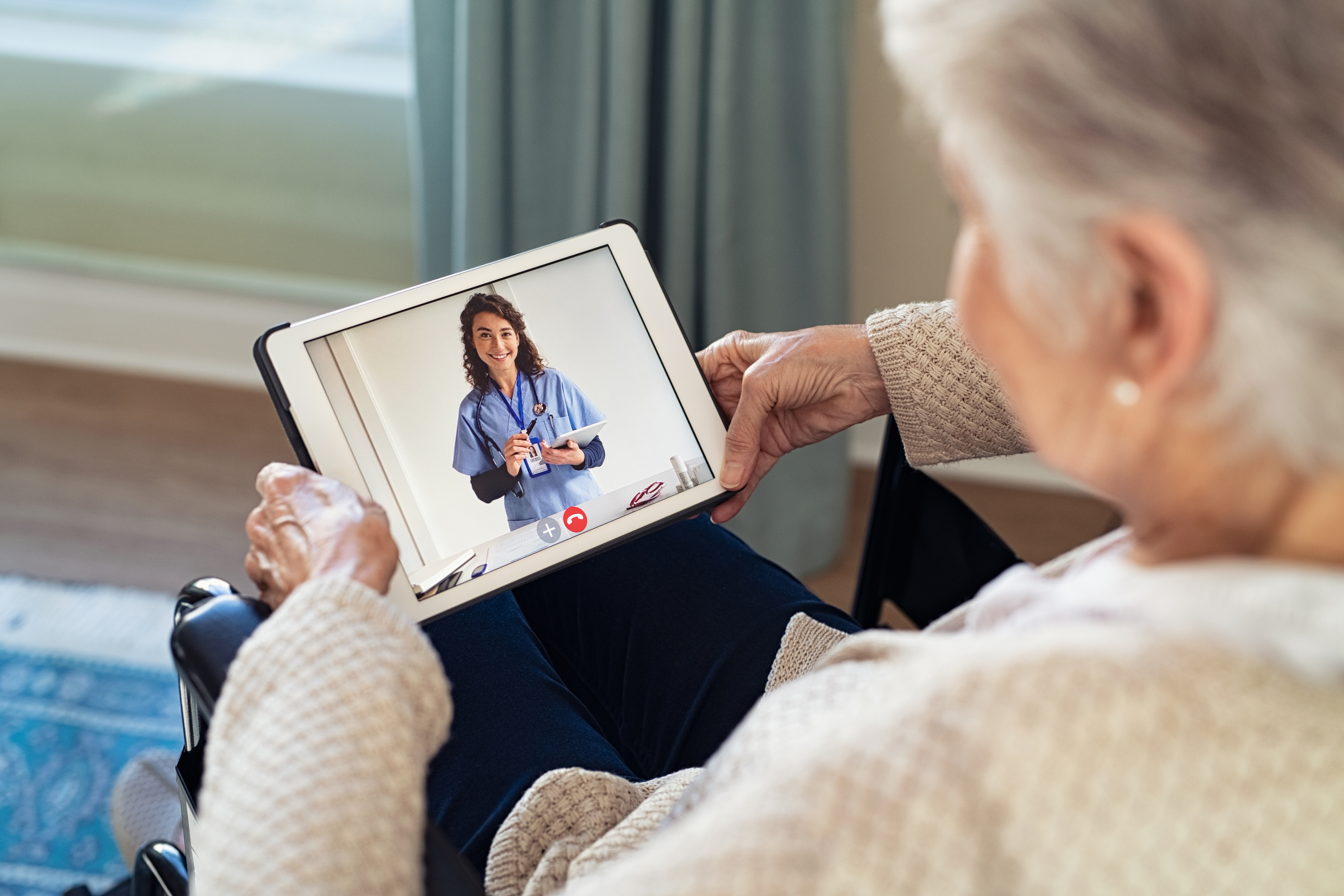
My mother is in long term care (LTC).
When I show up to work every day, I'm not working from theory. I know what it feels like to trust a facility with someone you love. I know what families are watching for. After more than 30 years in health care, from the emergency department to community-based care to where I sit now, I also know how often the system makes that trust harder to earn than it needs to be.
The core challenges haven't changed much, even as our technology has improved.
Coordination of care, collaboration among the providers delivering it, and communication of what's happening and when.
Three things that sound straightforward until you're managing a resident with several chronic conditions, a multitude of specialists adding orders, and a call light going off at 2 a.m. when there’s no clinician in the building.
That's the reality most skilled nursing teams are navigating, and it's the reality Lumina Care addresses on a daily basis.
When Facilities Require the Most Assistance
Overnight hours often leave skilled nursing facilities (SNFs) most exposed. There are fewer staff, clinical support can be limited, and the response we see too often is to transfer the resident to the ER.
This occurs not because it’s the best clinical decision, but because an overnight provider might not know the resident or have access to their complete medical picture.
The residents most affected are also the most complex. The average LTC resident is managing five to seven chronic conditions. Many are seeing multiple specialists: cardiology, pulmonology, behavioral health, wound care, etc., each with their own care plan. In rare instances, these care plans are well coordinated and well communicated.
When there is an acute change overnight, on-site staff do their best to deliver coordinated care, but it’s a challenge.
What Telehealth Can Actually Do
There are still skeptics, and I understand why. "Telehealth" gets used loosely, and passive remote monitoring (data collection and flashy apps with no real-time clinical response) isn't the same thing as delivering actual care via telehealth.
This distinction matters.
Telehealth means a clinician on the other end of a screen who can conduct a visual assessment, respond to an acute need, adjust a care plan, and document directly into an electronic medical record (EMR). It means having someone available when a patient needs clinical care and then sharing the information amongst providers.
I think about a major winter storm we navigated not long ago. Providers couldn't physically get into facilities, but phone lines were up, Wi-Fi was working, and we were there—remotely.
We managed acute needs, monitored residents, and kept facility teams from worrying about transfers that would have been a logistical nightmare. Telehealth didn’t replace anyone. It made vital care delivery possible during a weather emergency.
The Outcomes That Earned Our Confidence
We're careful about the claims we make. What I can tell you is what we've seen and documented.
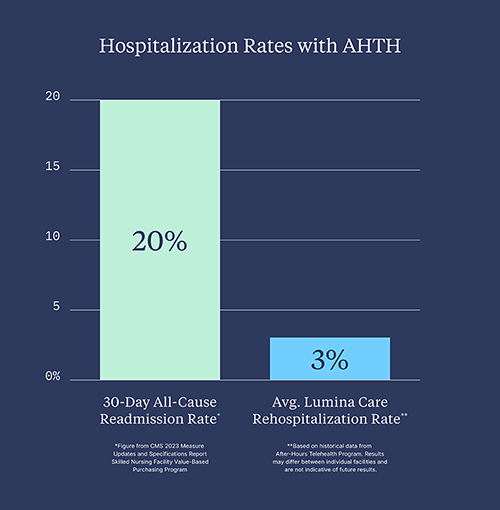
In a SNF partnership with a multi-state operator running our After-Hours Telehealth and Transitional Care Management programs, we saw hospitalization rates among facilities come in under 2 percent That means 98 percent of patients were safely treated in place.
For context, the industry average for SNF hospitalizations without this kind of coverage runs around 20 percent
On the transitional care side, readmission rates dropped by 50 percent within five months, and we’re continuing to work with each facility on an individual level to improve our coordination even more
Those numbers reflect something we've come to believe deeply: continuity across settings is what determines whether the progress a resident makes in a facility holds.
The transition home isn't the finish line. It's the moment that requires the most coordination, the most follow-through, and frankly, the most investment in everything the clinical team worked so hard to build.
What Being Part of the Team Actually Looks Like
Every Lumina Care partnership begins with a clinical facility assessment. We sit down with leadership at both the corporate and building levels to understand how we can collaborate to assist in care delivery in each facility. That assessment shapes every care plan we develop, so that when we place an order after hours, it can be fulfilled on site. We understand the facility’s capabilities and verify our plans of care align with capabilities and the resident’s goals of care.
We also work on the operations side to make sure our clinicians have full visibility across EMRs. The EMR access allows our teams to review existing care plans, specialist notes, prior hospitalizations, and goals of care before interacting with any resident. We enter orders directly and have daily follow-up reports that are delivered to the facility and the primary care provider. This way, we’re confident everyone involved in a resident’s care delivery is in the loop.
Our Lumina360 dashboard gives facility leaders a real view of their residents. At a glance, they can easily see action items that need attention, simplifying compliance and care management.
I'm often asked whether we're there to replace anyone. The answer is no, and I mean that plainly. We're an additional set of eyes. We are here to help!
Lumina Care’s goal is to be an extension of the care team, treat residents in their home when able, help primary care providers with their patients, and assist with safe transitions home. Long term care is full of amazing people. We don’t want to replace the people who know the residents and facilities, we simply want to collaborate to assist in necessary care delivery.
The Organizations That Will Lead
When I think about where skilled nursing is heading, I keep coming back to something simple: the organizations that will continue to thrive will be the ones willing to ask hard questions about how care is delivered and then act on the answers.
That's especially true in rural areas, where a facility's ability to offer specialty care can come down to geography as much as resources. Telehealth changes that equation without requiring a complete overhaul of staffing or operations.
My mother is in long term care.
The people caring for her are working hard and deserve every tool available to do that well. So does everyone else in care delivery, and Lumina Care is here to help with that!
Laura Geiger is the Chief Medical Officer at Lumina Care.
Lumina Care provides virtual clinical care and operational support to skilled nursing and long term care facilities across the country. Programs include After-Hours Telehealth, Chronic Care Management, Behavioral Health Integration, Collaborative Care Model, Telepsychiatry, Talk Therapy, Transitional Care Management, and the Lumina360 Care Analysis Dashboard.
Learn more at LuminaCare.com.
updated: 6.10.2026