 A new year offers an opportunity to set new goals, build on progress, and ask an important question: What’s next?
For long term care providers committed to improving quality, the American Health Care Association/National Center for Assisted Living (AHCA/NCAL)
National Quality Award Program offers a clear path forward.
Whether an organization is considering applying for the first time, preparing to advance to the next award level, or returning to the process after a previous application, the Quality Award journey provides an opportunity to take a closer look at how an organization operates, where it is succeeding, and where there is room to improve.
And while earning a Bronze, Silver, or Gold award is certainly something worth celebrating, the value of the program extends far beyond the recognition itself.
At its core, the National Quality Award Program is a framework for continuous improvement. Based on the Baldrige Excellence Framework, the program challenges providers to examine their organization as a whole, from leadership and workforce to operations, results, and experience for residents and families.
As providers look ahead to 2027, now is the time to consider taking that next step.
Understanding the Quality Award Journey
The National Quality Award Program is designed as a progressive journey, with three levels that build upon one another.
Bronze –
Commitment to Quality is the starting point. Applicants begin by establishing a strong organizational foundation, including defining their mission, vision, and key factors that influence how they operate. The Bronze process helps organizations better understand themselves and establish the groundwork for systematic quality improvement.
Silver –
Achievement in Quality takes that work further. Organizations demonstrate effective approaches to improving performance and show how those approaches are deployed throughout the organization. Applicants also begin demonstrating results and examining how their processes contribute to better outcomes.
Gold –
Excellence in Quality is the program’s highest level of recognition. Gold applicants demonstrate systematic processes and sustained results across their organization, showing that performance excellence and continuous improvement are deeply embedded in how they operate.
The goal is not simply to move from one award to the next as quickly as possible. Each level is an opportunity to strengthen systems, learn from feedback, and build the organizational capabilities needed to achieve better outcomes over time.
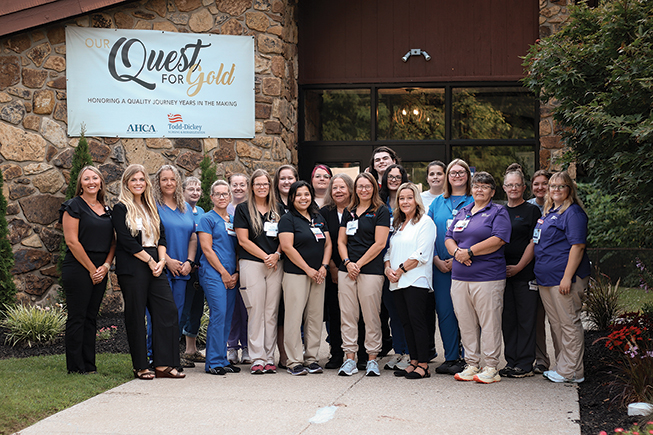
2026 Gold Award recipient
Todd-Dickey Nursing & Rehabilitation
Leavenworth, Indiana
|
Navigating the Application Process
A strong application begins well before the deadline. The Quality Award application is designed to encourage thoughtful organizational assessment, so giving your team enough time to understand the criteria, gather information, discuss your approaches and results, and review your responses can make the process much more valuable.
Applicants also do not have to navigate the journey alone. AHCA/NCAL offers application materials, criteria guidance, educational resources, and other tools to help organizations understand program expectations and prepare their submissions.
Step 1: Determine your award level.
Start by reviewing the three Quality Award levels—Bronze, Silver, and Gold—and the eligibility requirements for each. Identify the level that represents the appropriate next step in your organization’s Quality Award journey.
Step 2: Review the application materials.
Familiarize yourself with the application, criteria, requirements, and available guidance before you begin writing. Understanding what the application asks will help your team approach the process more strategically.
Step 3: Assemble your team.
The Quality Award process should not fall to one person. Because the application touches many parts of an organization, involve leaders and team members who can contribute different perspectives, information, and results. Establish roles and a timeline early to keep the process moving and help ensure the lessons from the application extend across your organization.
Step 4: Look back before moving forward.
If your organization has applied previously, revisit your examiner feedback. This outside perspective can help identify strengths and opportunities for improvement. Consider what has changed since your last application and how your organization has acted on that feedback.
Step 5: Build your application.
Give your team plenty of time to gather information, discuss your processes and results, and develop thoughtful responses. Use the application not as just an exercise in completing required questions but as an opportunity to assess how your organization operates.
Step 6: Review and refine.
Before submitting, review the application. Make sure responses are clear, consistent, and supported by appropriate information and results. Consider asking someone who was not closely involved in drafting the application to review it with a fresh set of eyes and identify gaps or areas that need clarification.
Step 7: Submit by Jan. 21.
Don’t wait until the final hours. Complete your final review and submit your 2027 National Quality Award application by Jan. 21, 2027.
Throughout the process, take advantage of the resources available through AHCA/NCAL, and learn from others who have participated in the program. Most importantly, use the application as an opportunity to engage your team in meaningful conversations about quality, improvement, and where your organization wants to go next.
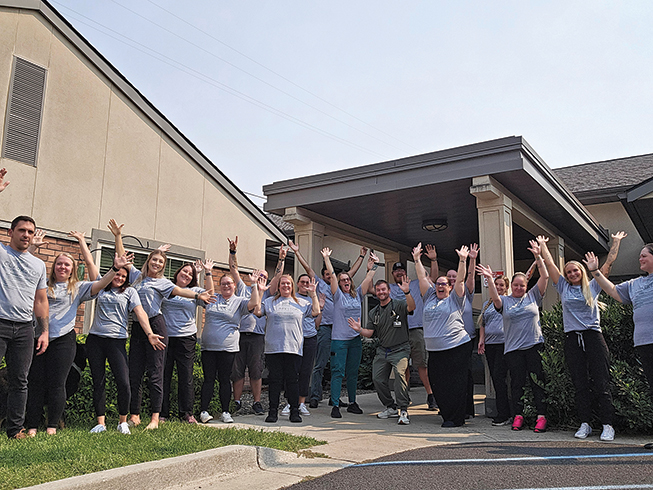
2026 Gold Award recipient
Clarkston Health & Rehabilitation of Cascadia
Clarkston, Washington
|
FAQs: What Providers Should Know before Applying
For organizations considering the Quality Award journey, misconceptions about the process can sometimes create unnecessary hesitation. Here are a few important things prospective applicants should know.
-
Is the Quality Award Program primarily about earning an award and receiving recognition? While recognition is an important part of the program, its larger purpose is continuous improvement. The application process and feedback report help organizations identify strengths, gaps, and opportunities to improve performance.
-
Can a well-written application or hiring a consultant improve my chances of receiving an award? Strong writing cannot replace effective organizational practices. Consultants can help organizations interpret the criteria, but hiring one is not required. Further, a consultant should not write an organization’s application. The application should reflect the organization’s own practices, processes, and results.
-
Is there a required timeline or number of attempts for progressing through the Quality Award levels? No. Every organization’s Quality Award journey is different. There is no requirement to apply a certain number of times or advance to the next level immediately. An organization could achieve Gold on its first attempt or take several application cycles to get there.
-
Is there a limit on the number of organizations that can receive a Gold Award each year? No. The program does not impose a quota on Gold recipients. Gold is the program’s highest and most rigorous level, and earning it requires organizations to demonstrate a sustained, systematic approach to quality and performance excellence. While relatively few organizations achieve Gold each year, there is no predetermined limit on the number of recipients.
-
Do an organization’s results need to be perfect to earn an award? No. Excellence does not mean perfection. Even Gold recipients may have missing measures, unfavorable trends, or areas where performance could improve. Organizations should not let imperfect or incomplete results discourage them from applying or continuing their Quality Award journey.
-
How can organizations make time for the application process while still focusing on resident care? Many aspects of the award criteria align with the work organizations are already doing through quality assurance and performance improvement and other efforts. The process can help teams take a focused look at their strengths and opportunities for improvement while gaining a valuable outside perspective on their current operations and practices.
-
Can smaller and independent organizations successfully participate in the Quality Award Program? Yes. The criteria are designed for organizations of all sizes, ownership models, and resident populations. Rather than favor larger organizations, the framework allows each applicant to demonstrate its strengths and improvement efforts within the context of its own operations and community.
Make 2027 Your Next Step
Every organization’s quality journey looks different.
For some, 2027 may be the year to submit a first Bronze application. For others, it may be time to build on a Bronze or Silver award and pursue the next level. And for organizations that have applied before without receiving an award, this may be the year to take what they learned, apply the feedback, and try again.
Wherever your organization is in its journey, the important thing is to keep moving forward.
Applications for the 2027 AHCA/NCAL National Quality Award Program are due Jan. 21, 2027.
Start now, engage your team, and make 2027 the year you take the next step toward performance excellence.
Meet the 2027 Gold Panel of Judges
|
Behind the National Quality Award Program is a dedicated group of professionals who bring extensive experience in quality improvement, organizational performance, and long term care: the Gold Panel of Judges. Their expertise and commitment to quality play an important role in recognizing organizations that demonstrate systematic approaches, strong results, and a sustained commitment to excellence.
For the 2027 award cycle, nine distinguished professionals will serve as the National Quality Award Gold Panel of Judges. The panel welcomes one new judge this year: Allan Engelauf.
The panel is responsible for reviewing Gold applications and helping ensure the program’s highest level of recognition continues to reflect rigorous standards of performance excellence. |
- Cathy Bergland, Owner, CB Leadership Group
- Gary Floss, Consultant, Independent
- Kevin Deats, Owner, Spire Quality Consulting
- Paul Grizzell, President, Core Values Partners, Inc.
- Jeff Calhoun, Founder and President, Calhoun Consulting Partners LLC
- Renee Ridling, Executive Director, Gingerbread House, Inc.
- Maryruth Butler, Director of Quality and Integrity, Cascadia Healthcare
- Ron Smith, Performance Excellence Director, Mary Greeley Medical Center
- Allan Engelauf, Chief Executive Officer, Vista Pacifica Convalescent
|

Cristina Walls is senior manager, public affairs at the American Health Care Association/National Center for Assisted Living.