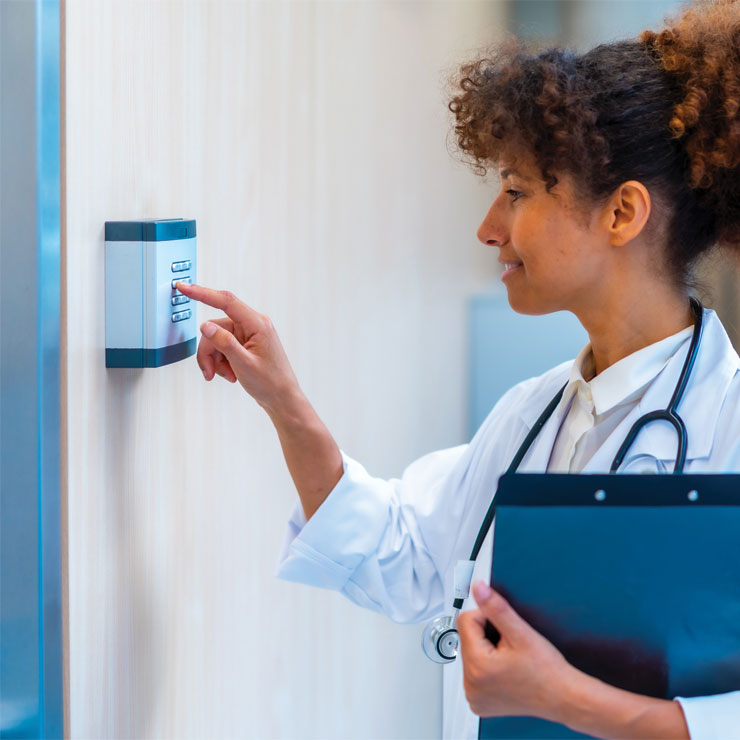
 Senior living facilities need to blend residential comfort, medical readiness, hospitality, and security into a single integrated ecosystem designed around the well-being of older adults. As these communities continue to evolve—from traditional assisted-living homes to sprawling, campus-style continuing care retirement communities—their operational demands have become increasingly complex.
At the heart of these complexities lies the need for reliable, intuitive, and integrated access control systems. These systems must balance safety and security with accessibility, and regulatory compliance with an atmosphere that still feels like home. Understanding the intricacies of senior living means recognizing the delicate interplay between human needs and the technologies that support them, particularly in controlling who can move where, when, and under what conditions.
Diverse Access Needs
One of the foundational challenges in senior living is the diversity of resident needs. A single facility may include independent-living apartments, assisted-living units, and memory care wings. Each of these environments comes with its own risk factors and considerations for freedom of movement. Residents in independent living expect near-total autonomy, often with minimal restrictions, whereas memory care residents require more structured mobility boundaries to mitigate risks such as wandering or elopement.
Integrated access control systems must therefore be capable of granular zoning, where doors, elevators, and outdoor spaces can enforce customized permissions based on the cognitive, physical, and medical profiles of individual residents. In addition to resident access, safe access and permissions can be granted for back-of-house offices, including administrative office spaces, medical and storage closets, and recordkeeping areas.
At the same time, senior living facilities are dynamic environments that welcome not just residents but families, caregivers, contractors, medical personnel, volunteers, delivery services, and third-party providers. This constant flow introduces unique security challenges. Facilities must track and manage a variety of credentials without inhibiting community engagement. Integrated, modern access control solutions, therefore, rely on cloud-based credentialing, visitor management software, and time-bound access credentials to streamline entry while maintaining auditability.
For example, a visiting nurse may receive a credential valid only for specific hours and areas. In contrast, family members may be granted privileges suited to their loved ones’ locations and care plans. This approach reduces administrative time and effort associated with traditional sign-in logs while providing real-time oversight and data analytics that support compliance and operational efficiency.
Emergency preparedness also plays a vital role in the design of access control systems in senior living. Access control must integrate with life-safety systems so that doors unlock or lock in accordance with the emergency scenario.
Human-Centered Access
Equally important is the human-centric aspect of system design. Residents in senior care communities often experience mobility impairments, vision limitations, or cognitive challenges that make traditional mechanical keys impractical. Access points must be intuitive, physically accessible, and often hands-free. Mobile-friendly technologies, facial identification systems, and automated doors help remove barriers and maintain residents’ independence.
Change can be hard, especially for seniors. They become used to a particular process or behavior patterns. When implementing new technologies and solutions, significant consideration must be given to the existing processes and to technologies that residents feel comfortable using. For example, many seniors may not use a smartphone; they may still use a flip phone or feel uncomfortable with either. If a facility decides to implement a visitor-entry system that requires telephone approval or authorization from a resident, the new system must support both digital and analog communications.
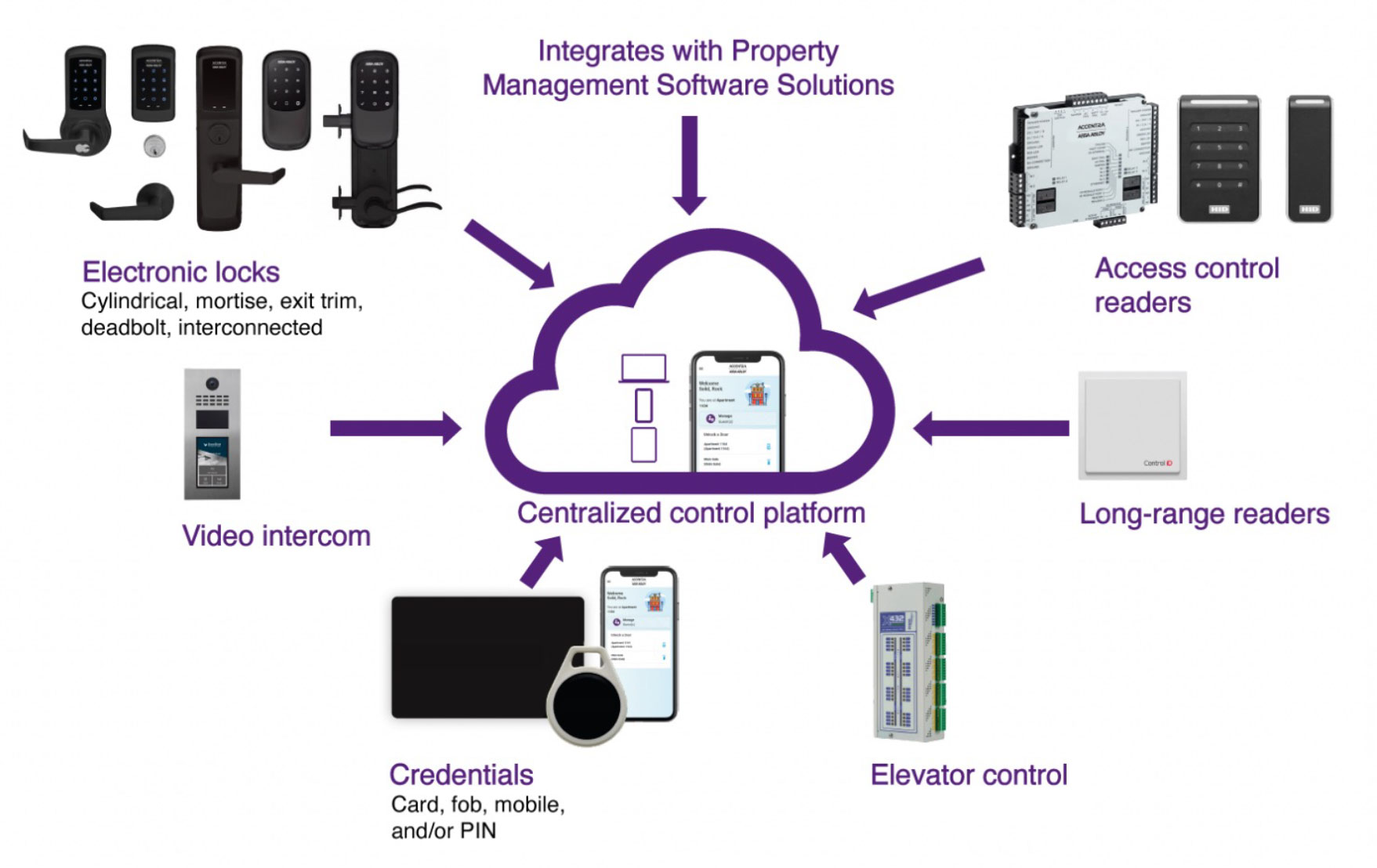
For example, when the existing door hardware at some senior public housing facilities began failing, the housing complex sought to modernize the facilities' security by integrating advanced systems that would also accommodate residents' preferences. The selected solution needed to support card access security, audio and video intercom communication, cloud-based management, and residents' ability to answer door calls via landline or cellular phones via updated IP-based door stations.
Each resident was provided with a rights-managed key fob, an app for the video intercom, and a telephone intercom with caller ID identifying the intercom as “Front Door.” From their phones or intercoms, residents could temporarily unlock the front door to let guests inside. Additionally, resident-approved family members can be granted mobile keys through a cloud-based access control system and the video intercom app to access the building and the apartment door. Ongoing operating costs were reduced by eliminating nine dedicated PSTN phone lines, and each building now has a future-proof, low-maintenance, easy-to-use door security system.
Analytics and Maintenance
From a management perspective, data and analytics are increasingly valuable. Cloud-based platforms provide administrators with detailed reports on door events, staff movements, resident patterns, and system health. These insights can inform staffing decisions, maintenance planning, risk assessments, compliance audits, and even clinical strategies.
Finally, the implementation and ongoing maintenance of access control systems must account for the realities of senior living budgets, regulatory scrutiny, and staffing capabilities. Systems should be scalable as the community grows, easy for staff to administer, and backed by strong vendor support. Training is a continuous necessity, especially in settings with frequent staff changes. The most successful implementations are those where the technology fades into the background, supporting safety and efficiency without diminishing the warmth and sense of community that residents expect from their home.
 The intricacies of access control in senior living facilities extend far beyond locking and unlocking doors. They encompass a careful blending of safety, autonomy, compliance, clinical support, operational efficiency, and resident experience. The best systems acknowledge the nuanced needs of aging populations and the professionals who care for them, creating environments where technology quietly supports dignity, independence, and well-being.
Michael Rooney is the director of business development multifamily for ASSA ABLOY with over 20 years of experience in the access control and contract hardware distribution industries.
Provider magazine includes information from a variety of sources, such as contributing experts. The views expressed by external contributors do not necessarily reflect the views of Provider magazine and AHCA/NCAL. Learn how to submit an article.