 Aging in place is often framed as a lifestyle promise. For senior living operators, it’s an infrastructure challenge.
Residents may arrive active and independent. Few remain that way indefinitely. Communities built primarily around first impressions—attractive amenities, welcoming lobbies, hospitality-driven layouts—may struggle years later when those same residents need transportation support, assisted access, or on-site care.
The difference between communities that truly support aging in place and those that don’t often comes down to whether mobility was built into the design from the start.
Parking layouts, arrival zones, circulation paths, and access points shape daily life long before residents need walkers or wheelchairs. These systems influence how residents move through their environment, how staff deliver services, and how easily operations adapt as needs evolve.
There is no static resident profile. A 70-year-old who drives daily may become an 85-year-old who relies on assisted transportation and mobility support. Communities that plan for this progression can adjust gradually. Those that don’t face disruptive retrofits, increased staffing pressure, and ongoing operational workarounds.
Prioritizing Long-Term Adaptability Over First Impressions
Senior living development understandably emphasizes what prospective residents see first: common spaces, dining venues, wellness amenities, and curb appeal. These features help fill units, but they rarely determine whether a community will function well ten or fifteen years later.
Infrastructure does.
When access points are narrow, drop-off areas are undersized, or parking layouts lack flexibility, operators inherit long-term constraints. Introducing transportation services, valet operations, or assisted mobility programs becomes difficult once a building is occupied. Staff compensate with longer escort times, manual traffic management, and improvised workflows. All of which create inefficiencies that compound year after year, increasing labor costs and limiting service capacity.
For residents, these limitations surface in everyday moments: longer walks from parking to residences, congested arrival areas, or awkward transitions between buildings. Over time, some begin limiting their routines simply because moving through the community takes more effort than it should.
Future-proofing starts with fundamentals. Arrival areas must support more than resident parking, especially as driving declines and curbside access becomes essential for ride services, family visits, and medical transport. Circulation paths should minimize unnecessary distance between residences, dining, wellness, and services. Lighting, flooring, and wayfinding should reduce fall risk while helping staff respond more efficiently.
Communities that build this flexibility upfront gain room to adapt as resident needs change. Those that don’t are left managing around fixed limitations, relying on staffing workarounds and costly modifications to deliver the same level of care. The difference is operational, and it determines how smoothly a community can evolve over time.
Designing for the Mobility Continuum, Not a Single Life Stage
Mobility does not change overnight. It evolves gradually and unevenly, which means senior living communities are always supporting multiple levels of independence at once.
On any given day, one resident may be driving themselves to appointments, another may rely on scheduled transportation, and a third may need door-to-door assistance. Designing for the mobility continuum means creating systems that work for all of them at once, rather than optimizing for a single “average” resident.
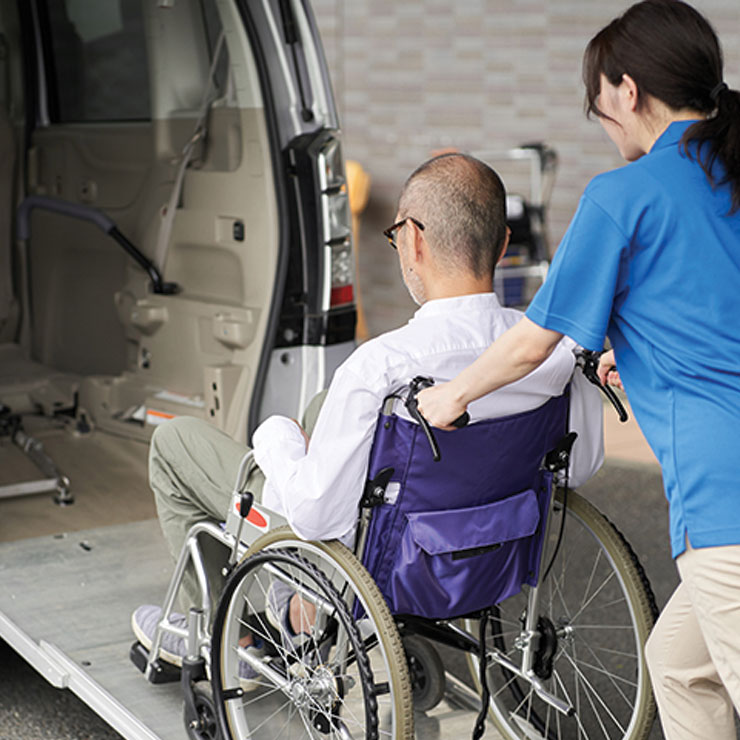
This starts at arrival. As personal vehicle use declines, curbside capacity often becomes more important than parking counts alone. Clear, protected drop-off zones improve safety, reduce congestion during peak periods, and make room for ride services, caregivers, and medical transport.
Inside the community, intuitive circulation preserves resident autonomy while easing staff workloads. Direct pathways, consistent visual cues, and logical adjacencies help residents move confidently and allow teams to operate more efficiently, reducing the need for constant escorting.
Equally important is the ability to layer services over time. Parking and access areas should be designed to shift from resident vehicles to valet operations, transportation fleets, and visiting clinicians without reworking the campus. In some communities, this means using compact or vertically configured parking to preserve curbside access and circulation space as driving declines.
When mobility systems are built to accommodate change, aging in place moves from a lifestyle promise to something operators can actually deliver. Residents stay connected to their environment, and operators gain the flexibility to meet rising care needs without rebuilding their infrastructure.
Moving Beyond Compliance Toward Dignity-Centered Design
Most senior living communities meet accessibility requirements. That is the baseline. But compliance alone often results in add-ons: alternate routes, secondary entrances, or retrofitted ramps that technically solve problems while complicating everyday life.
Over time, these workarounds can leave residents feeling routed around their own communities.
Dignity-centered design integrates mobility into the primary experience. Accessible paths are the same paths everyone uses. Arrival areas support assisted access without turning it into a spectacle. Layouts accommodate mobility aids naturally rather than treating them as exceptions.
This integration benefits operations as much as residents. Staff spend less time navigating awkward transitions. Transportation services run more smoothly. Fewer special accommodations are needed for residents to participate in daily activities.
Most importantly, residents maintain a sense of agency as their capabilities change. They remain part of the community’s flow instead of becoming logistical challenges to manage. For operators, that shows up as smoother arrivals, fewer workarounds, more predictable staffing needs, and environments that support care delivery without constant adjustment.
Infrastructure Is the Foundation of Aging in Place
Aging in place is not delivered through messaging or amenities alone. It is enabled by systems that support residents through every stage of life.
Communities that succeed prioritize adaptability over surface appeal, design for gradual mobility change, and move beyond basic compliance toward integrated, dignity-centered environments.
For operators, this reduces retrofit costs, eases staffing pressure, and expands service flexibility. For residents, it means staying in familiar surroundings, alongside friends and established routines, even as mobility needs change.
The buildings being designed today will shape resident experience and operational performance for decades. Decisions made now about parking, access, circulation, and arrival will determine how easily care is delivered and whether communities continue to function effectively over time.
 Aging in place is determined long before the first resident moves in. It’s the result of designing environments that anticipate change and allow people to remain connected to their routines, relationships, and sense of independence as they age.
Christopher Tiessen is president/CEO of KLAUS Multiparking America, a German-engineered automated parking solutions provider that specializes in space-efficient parking systems, including stackers, lifts, and automated valet technologies.
Provider magazine includes information from a variety of sources, such as contributing experts. The views expressed by external contributors do not necessarily reflect the views of Provider magazine and AHCA/NCAL.
Learn how to submit an article.