 Trust is the hidden foundation of every long term care provider, as vital to the organization’s success as its leadership or finances. An environment built on trust is one with low staff turnover, robust team cohesion, and high resident satisfaction. On the other hand, a low-trust environment can bring about a culture of fear and dissatisfaction, where issues go unaddressed and both caregivers and residents feel like they’re on their own.
Fortunately, trust can be built, and the strategies necessary to build it can be learned. For all the challenges of recent years, providers have made incredible strides in fostering organizational cultures defined by empathy and openness. As they’ve learned, trust is far from an abstract concept; it’s at the very heart of the service they provide.
Defining Trust
What does a high-trust organization look like? For Marvell Adams, CEO of the Caregiver Action Network and a former nursing home administrator, transparency is imperative.
“It comes down to some key metrics,” he said. “Transparency around financial information, transparency around governance, and transparency around culture—and being able to build and retain that trust with residents, staff members, and board members in a way that gains consensus and invites them into the conversation no matter what.”
That’s a high bar, but reaching it is a matter of communication and accessibility. As Adams added, organizational leaders making themselves available—to residents, employees, families, and other stakeholders inside and outside the organization—goes a long way toward establishing trust. So does communicating their actions and intentions with authenticity.
“Sincerity goes a long way, and with that comes vulnerability,” Adams said. “That Venn diagram of how we’ve come to be at a particular community is where that core of trust starts to grow, because it provides the organization with stability.”
According to Adams, sharing your why is a show of authenticity: Why are you at an organization? What brought you here, and what keeps you coming back? What are your values, and how do you live up to them?
By being open about their own stories and earnestly caring about the stories of others, leaders can build trust with their employees, and caregivers can build trust with their residents. “It leads to more than just ‘We’re here because I need a job, you need a place to live, you need a paycheck,’” Adams said. “It’s like ‘We’re here because I have a story that’s led me to be here, and you have a story that hopefully has led you to be here.’”
Trust in Action
One example of the sort of organization Adams described is Pinnacle Living, which operates six nonprofit communities—including independent living, skilled nursing, assisted living, and memory care—in Virginia. Recognized as one of the Richmond Times-Dispatch’s Top Workplaces 2024, Pinnacle has made considerable effort in recent years to build trust among its employees (and not only by improving wages, benefits, and paid holidays). Perhaps the greatest fruit of this effort is Pinnacle’s policy of conducting non-anonymized employee surveys, for which it gets a participation rate of almost 70 percent—as opposed to less than 50 percent when the surveys were still anonymous.
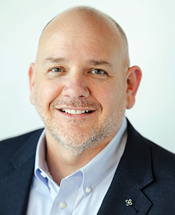 “We see that as a huge step forward,” said Chris Henderson, Pinnacle’s CEO. “It’s a proof-is-in-the-pudding sort of thing. When we build trust with team members and managers, they’re going to be more honest with us. But it was a learned cultural practice, not something that happens inherently.”
Henderson said it took about eighteen months of trust-building to get to this point. Employee orientations specifically address the survey policy, and new employees take onboarding surveys at thirty, sixty, and ninety days to get them used to the idea. (The thirty-day surveys tend to have a lower response rate.) Another important part of the process is rigorous vetting of Pinnacle’s managers to ensure they can deal with feedback productively; until they’ve demonstrated they can, Henderson’s team responds to surveys personally.
“We do a good job of screening managers, but every once in a while, feelings can be hurt,” Henderson said. “So our executive directors are involved in every single response until we know that our leaders and our managers and directors are at a spot where they can take that constructive criticism and say, ‘I can grow. I can do better.’”
Of course, trust isn’t just about employees: it’s also about residents. Earning their trust, Henderson said, has been a significant investment in Pinnacle’s culture, which has a major focus on resident well-being. The provider’s Pathways to Wellness program offers ten domains of cultural engagement, including creative activities and fitness, community outreach, and gardening.
“As we built our resident culture, we realized that engagement happens in psychosocial environments, spiritual environments, educational environments, in creative arts,” Henderson explained. “Everyone participates in their own way, and it’s that connection between residents and team members and families that really helps build our Pathways program.”
Indeed, the program has been so successful at Pinnacle that resident surveys are non-anonymized, too. “It’s that trust that gets us to the point where residents are saying, ‘This is what I’m seeing. This is what’s going on,’” Henderson said. “And if someone says, ‘Gee, I don’t feel safe in the building all the time,’ then our executive director or our facilities manager or our security team is able to go to them and say, ‘Talk to me about what’s going on that you’re not feeling safe.’ It’s about meeting our residents where they are.”
Teaching Trust
For providers looking to follow Pinnacle Living’s lead and build trust in their own organization, one valuable resource is Building Trust in Long Term Care, an American Health Care Association/National Center for Assisted Living (AHCA/NCAL) course. Available to AHCA/NCAL members, the evidence-based course draws on the work of Harvard Business School professor Francis X. Frei, who has conducted extensive research into the role of trust in organizational culture.
 According to AHCA/NCAL’s Interim Executive Director of Integrated Networks Courtney Bishnoi, who teaches the course with Chief Medical Officer David Gifford, the program centers on Frei’s three drivers of trust:
- Authenticity: an approach built on genuineness and sincerity, in which one’s actions align with one’s words.
- Logic: an approach built on sound judgment, competence, and expertise, as well as an ability to communicate one’s decisions with clarity and reason.
- Empathy: an approach built on care and openness toward others, in which one seeks to learn about the other’s needs and interests without judgment.
As Bishnoi explained, the course was developed to address an urgent trust issue: vaccine uptake early in the COVID-19 pandemic. “There were significant challenges with vaccine uptake—staff across all health care sectors were hesitant to get the COVID vaccine,” she said. “As we began talking more directly with our providers and reviewing the research, it became clear that trust had been deeply shaken by some of the events that occurred during the pandemic.”
The course has grown significantly in the years since, evolving to address a variety of issues that all come back to trust and psychological safety: a sense of comfort in the workplace that allows employees to share ideas, concerns, and disagreements without fear of being ignored or even punished. It also incorporates learnings from the Institute for Healthcare Improvement, which has spent years researching these same subjects.
“We are using a lot of well-tested, scientific, evidence-based approaches,” said Bishnoi, adding that teaching the course has significantly affected the way she approaches her own work. “It’s probably been the most influential experience in my development as a leader—learning where I can make an impact, and recognizing that I won’t always get it right but carrying forward the skills I’ve learned to keep trying to do better each time.”
Practicing Trust
Greenbriar Community Care Center, an AHCA/NCAL member in Slidell, La., participated in the course. Cazelin Breaud, an LPN at the facility, said the skills her team learned helped to create a more authentic and trusting workplace culture.
“We were all surprised, to be honest with you,” she said. “We opened up; everybody was able to say things.”
Her own nursing pod had such a positive experience with the course that they encouraged others to come for the training, as well. “It helped with our communication; it helped make a more effective environment and organization,” she said.
Breaud sees the effects of the course daily in how eagerly Greenbriar’s residents approach staff with questions or concerns. “You can see the change,” she said. “They’ll come to us, then they’ll go and talk to the administrator about how the staff is more helpful. We listen to them and interact with them.”
She described a resident meeting during which she was able to deploy her trust-building skills when one resident disagreed with another. “We’re going take turns and see what she has to say,” she told the group.
“They wound up saying it was a good meeting,” Breaud said. “It’s about hearing people out instead of saying, ‘I don’t want to participate.’”
As for the staff, she observed that team cohesion has improved among her fellow caregivers, as well. “It’s just like everybody is one,” she said. This is a crucial outcome.
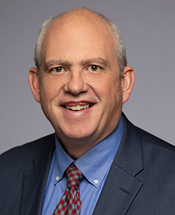 Gifford pointed out that one common finding in staff surveys of providers that take the course is a chronic mistrust among coworkers. “Staff trust their director of nursing and their administrator and their supervisor better than they trust their coworker,” he said. “The entire practice of nursing homes is based on the interdisciplinary team, and that only works if you have trust between the staff. So, to me, that finding just underscores the need to have leaders thinking about how you build a trusting culture in the facility.”
Breaud’s experience at Greenbriar speaks to the power of training rooted in authenticity, logic, and empathy. She was candid about what a low-trust culture looks like and what’s possible with a little trust-building.
“Sometimes people are scared to open up, or they worry about what another person is going to say about them and retaliate against them,” she said. “But once they see it’s not going to happen like that, they’re easy to talk to.”
Candi Rogers, Greenbriar’s administrator, offered a similar perspective. “It’s caused our staff to become more comfortable and feel safe saying whatever they want to say, as long as it’s respectful, and it taught them to communicate effectively,” she reflected, adding that she’s seen results in the way staff interact with residents, as well.
“To get them to understand and begin empathizing with people has really made a difference,” she said. “Not that they ever treated residents poorly, but it’s a different culture now.”
Clearly, Greenbriar’s doing something right: it was recently named by Newsweek as one of America’s Best Nursing Homes 2026, providers that stand out “for their commitment to safety, quality of care, and resident well-being.”
Providers can register for the trust-building course on AHCA/NCAL’s website. Bishnoi and Gifford also noted that AHCA/NCAL’s virtual Leadership Academy, a fifteen-week interactive program that covers tools and resources to help build trust across an organization, is about to enter its fourth year.
“This is about not just getting the leaders to get the skills,” Gifford said, “but about building a trusting culture in the facility. That’s what’s going to be necessary to meet the needs of our residents and families.”