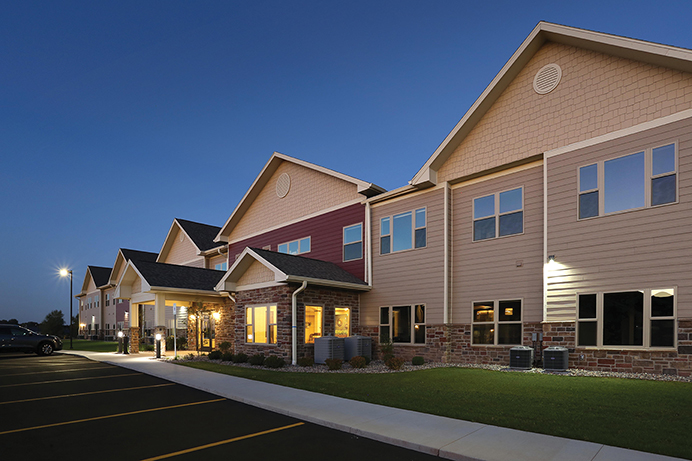
Service expansion has become one of the most important strategic conversations in senior living and post-acute care. As resident expectations shift, acuity rises, and market pressures intensify, providers are being asked to do more with the campuses they already own.
In many cases, the opportunity is not to build new, but to rethink what already exists. Underused spaces, outdated layouts, and legacy service models can often be repositioned to support new care lines, stronger resident experiences, and better long-term performance.
The challenge is knowing which opportunities are worth pursuing. That requires a disciplined look at market realities, resident needs, operational readiness, and the physical environment itself.
Begin with Market Demand
Any decision to expand services should begin with understanding what the market needs. A market demand study can reveal key trends in demographics, referral patterns, competitor offerings, and unmet or unclear resident expectations.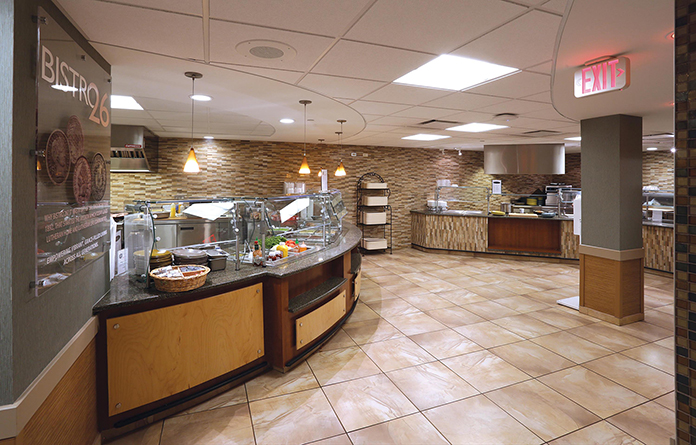
Your market demand study will help answer practical questions. Is there rising demand for memory care? Are more consumers seeking lower-cost alternatives to skilled nursing? Is there growing interest in short-term rehabilitation, enhanced assisted living, or hospitality-based amenities?
In most cases, formal analysis is reinforced by internal indicators such as wait lists, repeated requests from families, or referral relationships that point to consistent and/or unmet demand. When providers ground expansion decisions in measurable need rather than assumptions, they reduce risk and improve the odds that your business strategy will succeed.
Look Beyond the Wait List
Resident need is not identical to market demand, and that distinction matters. A campus may be known for one care model, yet its resident population may increasingly require something different as people age in place and stay on campus longer.
Communities built around independent living may find growing need for assisted living, memory support, or more flexible post-acute options. Some organizations are also discovering that reducing traditional skilled care beds and transitioning certain areas to lower-acuity residential models can better match family expectations and resident independence goals.
This type of repositioning can also create environments that feel less institutional and more like home. A careful review of resident profiles, family feedback, care transitions, discharge patterns, and unmet requests can reveal whether the current service mix still fits the people being served.
Test Operational Readiness
Even when a market opportunity is clear, expansion only succeeds if the organization can support it operationally. Adding a new care line requires more than renovating a wing or updating finishes.
It may involve new staffing models, different clinical workflows, regulatory requirements, training expectations, technology needs, and revised programming. Leaders should ask whether the organization can recruit and retain the right team and whether current systems can support the added complexity.
Not every market gap should be pursued. In some cases, a modest enhancement such as a bistro, a wellness amenity, or a short-term stay offering may create value without overextending staffing or operations.
Study the Building’s Potential
The physical environment has a direct impact on whether a service expansion can succeed. Existing buildings must be evaluated for code compliance, life safety requirements, circulation, lighting, privacy, and the ability to support the intended level of care.
Physical feasibility is about more than compliance alone. It is also about creating spaces that support dignity, safety, staff efficiency, and quality of life while still feeling homelike.
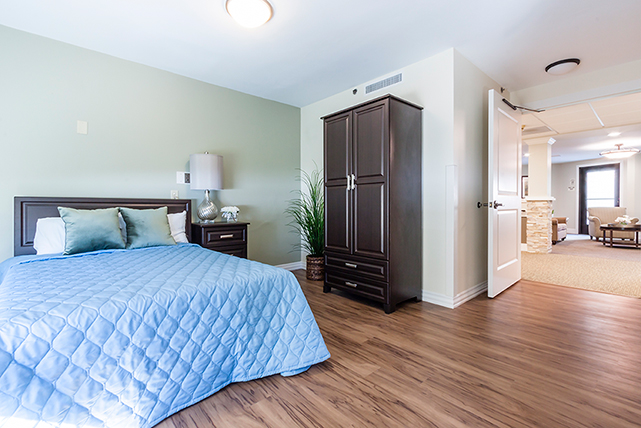 A strong example is the renovation of Magnolia Gardens at Skaalen Retirement Services, a specialized, memory care community-based residential facility on the Skaalen Retirement Services campus in Stoughton, Wisconsin. In this case, an outdated skilled care setting was transformed into a 16-unit community-based residential facility. Double rooms were converted into private rooms with full baths. Lighting and access control were improved, and walls were opened to bring more daylight into interior spaces.
The renovation also introduced centralized staff areas, a full cooking and serving kitchen, a bathing spa, laundry space, and dual-purpose cabinetry. In order to achieve the desired vision, an analysis of code required changes and how to accomplish them was critical to getting the project approved for the new license. The project shows how understanding building licensing requirements can result in thoughtful solutions that are realistic to existing conditions; it can reposition a building for a different, more relevant care model.
Existing conditions may limit the possibilities for re-purposing spaces—it is better to understand this up front as you begin planning to avoid headaches down the road.
Build the Strategy Across Disciplines
The most effective expansion efforts are rarely led by one department alone. They come from collaboration among leadership, nursing, facilities, operations, and frontline staff who understand how residents actually experience the campus.
In the Magnolia Gardens project, staff from multiple departments contributed insight that helped the design respond to real and honest irritations, unmet workflow needs, and challenges to serving residents well. That kind of input is not a nicety; it is a practical way to reduce risk and improve implementation which leads to a healthy business model and ultimately a better bottom line.
When organizations engage stakeholders early, they are more likely to identify hidden barriers, avoid costly redesigns, and create solutions that work in daily practice rather than only on paper. That is often the difference between a compelling concept and an executable strategy. Deliberate and careful planning can pay dividends for the owners and for the residents. Upfront planning is one of the most important indicators of future success.
Turning Capacity Into Capability
Service expansion should never be a reactive move based on empty square footage or competitive pressure. The strongest strategies emerge when leaders evaluate market demand, resident need, operational readiness, and physical feasibility together. When those factors align, campuses can evolve in ways that are strategic, financially sound, and mission aligned.
Jon Rynish is a senior project architect with with Hoffman Planning, Design & Construction, Inc. and a Leadership in Energy and Environmental Design (LEED) accredited professional. He can be reached at jrynish@hoffman.net.
Mike Edwin is a senior consultant – senior living and religious markets with Hoffman Planning, Design & Construction, Inc. He can be reached at medwin@hoffman.net.
Julie Heiberger is a senior project architect and the senior living market leader for with Hoffman Planning, Design & Construction, Inc. A member of the American Institute of Architects, the National Council of Architectural Review Boards, and the Board of Directors of the Society for the Advancement of Gerontological Environments, Julie can be reached at jheiberger@hoffman.net.



Provider magazine includes information from a variety of sources, such as contributing experts. The views expressed by external contributors do not necessarily reflect the views of Provider magazine and AHCA/NCAL. Learn how to submit an article.