 Maintenance directors in long term and post-acute care (LTPAC) don’t wear capes, but their efforts are heroic. They repair, reimagine, replace, and renovate. They improve, install, initiate, and innovate. They work to keep residents, staff, and visitors safe, comfortable, secure, happy, and healthy. These often-unsung heroes deserve support and recognition, including training to enable them to function as team leaders and key colleagues.
Safety First
Working to ensure community-wide safety is an essential but time-consuming endeavor that maintenance commits to every day. For instance, the maintenance team makes sure the sidewalks are safe. As concrete sidewalks or driveways age, maintenance finds and repairs holes that develop. In addition, they mount surge strips above the floors and conduct regular, comprehensive assessments of common areas, resident living spaces, and the exterior grounds to identify and immediately mitigate potential trip hazards, such as loose carpeting, uneven walkways, or loose or missing handrails. They check appliances and cords regularly and conduct safety checks to prevent electrical fires. They maintain air filters, air conditioners, and heating systems that keep buildings comfortable and the air clean. They replace lightbulbs indoors and outdoors for safety and security. They fix water leaks and work to prevent mold and mildew. Maintenance teams may also keep vans, buses, and other vehicles operational and safe.
 During bad weather and natural disasters, maintenance doubles down on their safety efforts.
Tina Sandri, a senior living executive in the Washington, D.C., area, said, “When it snows, they make sure driveways and sidewalks are cleared and salted for snow and debris. Sometimes they do it themselves and other times it’s with help from outside contractors they oversee.”
During bad weather and natural disasters, maintenance doubles down on their safety efforts.
Tina Sandri, a senior living executive in the Washington, D.C., area, said, “When it snows, they make sure driveways and sidewalks are cleared and salted for snow and debris. Sometimes they do it themselves and other times it’s with help from outside contractors they oversee.”
Even before weather-related or other disasters happen, the maintenance team focuses on preparedness. Tom Gojcaj, BBA, senior plant operations director for Avista in Mesa, Ariz., said, “Routine inspections and maintenance are conducted on critical life safety equipment, including fire systems, smoke detectors, sprinklers, emergency generators, and exit signs to ensure they are in working order and compliant with regulatory requirements.” They ensure all poisonous, toxic, combustible, and/or flammable materials are properly labeled and stored in locked areas.
David Hood, Senior Advisor/Technical Fellow at Jensen Hughes, Fairport, N.Y., added that the maintenance director’s role in emergency preparedness “could involve anything from developing various procedures and conducting training for staff to running exercises. They often are the first person called when there's something that's immediately impacting the facility, whether that's a snowstorm or a power outage.”
Gojcaj said, “The maintenance department’s role in safety is not merely reactive; it is the physical foundation for a secure and healthy environment, particularly concerning falls prevention and infection control. Our efforts are driven by proactive maintenance and environmental quality control.” He added, “I think the most important contribution maintenance can make in general is awareness, directly minimizing risks by ensuring the physical environment is consistently free from hazards that lead to accidents or injuries.”
Contributing to Quality and Compliance
The maintenance director and their team make significant contributions to quality and regulatory compliance. For instance, according to Gojcaj, they can assist the quality management program by participating in safety surveillance, which includes identifying and following up on incidents like resident injuries and falls, as well as monitoring the environment for compliance with safety standards. He added, “The maintenance director also may coordinate contracted services—such as for fire systems, generators, pest control, and plumbing—to ensure they meet regulatory requirements and maintain a safe and comfortable environment.”
In settings such as nursing homes and assisted living communities, the maintenance director is often the unsung hero of risk management, said Gojcaj. “While clinical staff focus on patient outcomes, the maintenance team ensures the physical environment doesn't become a liability. The maintenance director is the primary custodian of the [National Fire Protection Association] 101: Life Safety Code. Accountability here isn't just about fixing things; it is about documentation and verification.”
Elsewhere, under the Centers for Medicare & Medicaid Services (CMS) Emergency Preparedness Final Rule, maintenance directors are responsible for the “Physical Plant” section of the facility's emergency plan. Even though CMS dictates emergency preparedness compliance for skilled nursing facilities, it is also adopted in assisted living at the state level. Gojcaj said, “There is a significant weight placed on this role. Maintenance directors are expected to be subject-matter experts in complex regulatory codes, even if they don't have a background in law or engineering. In short, the maintenance director acts as the shield between the facility and massive fines or ‘Immediate Jeopardy’ citations. They turn abstract safety laws into a functional, breathing building.”
Sandri said, “Maintenance is part of our [Quality Assurance and Performance Improvement] team and produces QAPI reports like all other departments.” Elsewhere, Andy Hughes, Regional Vice President of Operations at Pathway South LLC in Louisiana, said, “We have a monthly maintenance meeting where we go through any hazards, any falls out of the building, and anything we’ve added. Our maintenance director also is part of our morning meetings and is active in our quality improvement efforts.”
Providing That Ounce of Prevention
Gojcaj said, “While the maintenance department is typically viewed as a cost generator and not a revenue source, especially with tight budgets, it plays a vital, proactive role in controlling expenses and reducing costs.” For instance, continuous vigilance, which involves regular monitoring and swift action to identify and address issues that lead to waste, such as minor water leaks or instances of excessive electrical usage, can help prevent small problems from escalating into expensive repairs.
Elsewhere, maintenance helps ensure energy efficiency by addressing issues such as lack of insulation or doors that do not seal properly. The maintenance team also ensures that mechanical equipment, such as refrigerator or air conditioning condensers, are kept clean. In addition, they leverage technical knowledge to implement efficiency upgrades that yield major savings. These include the strategic installation of smart technologies, such as light switch sensors, LED conversions, and water-reducing fixtures (e.g., in toilets, showerheads, and sinks), to conserve resources and lower utility consumption.
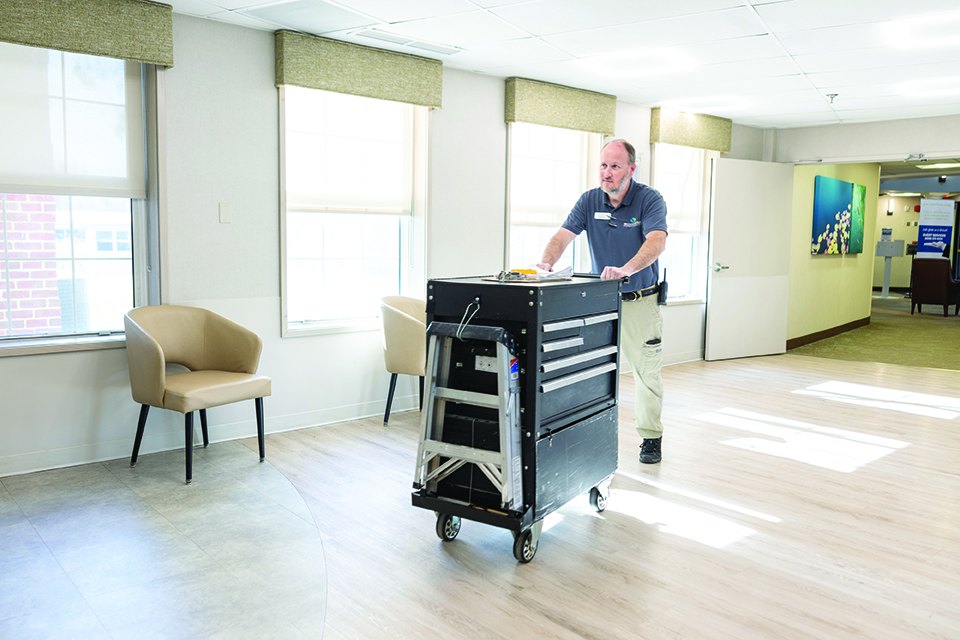 Hughes said, “If you have a good maintenance person or team, someone who is a jack-of-all-trades, you don’t have to rely as much on external contractors. Our maintenance manager can do a little bit of everything—from installing or repairing sheetrock to making small electrical and plumbing repairs. Also, he’s been here for several years, and he really knows the buildings and grounds.” Gojcaj added, “By maintaining a skilled, knowledgeable in-house team, we are able to execute a significant amount of repair and installation work internally. This core competency substantially reduces overall labor expenses and streamlines budget management.”
The maintenance team’s expertise and focus on maintaining equipment and systems can help increase their operational life and delay costly replacements. Sandri concluded, “An ounce of prevention is worth a pound of cure. A good preventative maintenance program is essential. Likewise, a good capital expense plan to retire/replace equipment is also needed. Technology to help monitor equipment live in real time, with remote access, seems to be the trend.”
It Takes a Team
The maintenance director doesn’t work in isolation. As with other components of LTPAC, team leaders throughout the facility coordinate and cooperate to troubleshoot, identify maintenance issues, and target opportunities for improvement. Gojcaj said, “Effective maintenance management, especially given the extensive physical size and limited maintenance staff that is common in our communities, relies entirely on robust cross-department collaboration.” He added, “The maintenance director depends heavily on other team members, such as caregivers, to serve as on-site eyes and ears, ensuring continuous awareness across tens of thousands of square feet. This essential partnership requires open communication and is executed through a specific process.”
The process involves identifying hazards and information technology needs. “This ensures that no issues are missed, provides a maintenance history, and allows for organized troubleshooting,” said Gojcaj. Through staff collaboration and data captured in these systems, the maintenance director identifies patterns, prioritizes challenges, and executes timely repairs, ultimately improving both safety and service outcomes.
Good communication skills are key for the maintenance director, Hood suggested. “There’s a real need to be able to communicate and collaborate with staff and others.” Maintenance needs to work with all departments to identify repair or improvement needs and ensure they are addressed promptly. Hughes agreed, adding, “Everyone at the facility needs to support and work with the maintenance team to make sure problems—such as a water leak or the need for lightbulb or filter replacements—don’t fall through the cracks.”
Fostering a Community Built on Trust
They may not realize it, but the maintenance director and team contribute to the emotional and psychological well-being of residents, staff, and visitors. Heather Harris, LCSW, Social Services Director at Heritage Manor of Mandeville, La., said, “The environment affects how people feel on a day-to-day basis. How someone feels about their surroundings has an impact on how they engage and interact in the community.” At the same time, when families come to visit, they see a place that is structurally sound, well maintained, and inviting. “This can make them feel more confident that their loved one is safe and well cared for,” Harris suggested.
Joanne Kaldy is a freelance writer and communications consultant based in New Orleans.