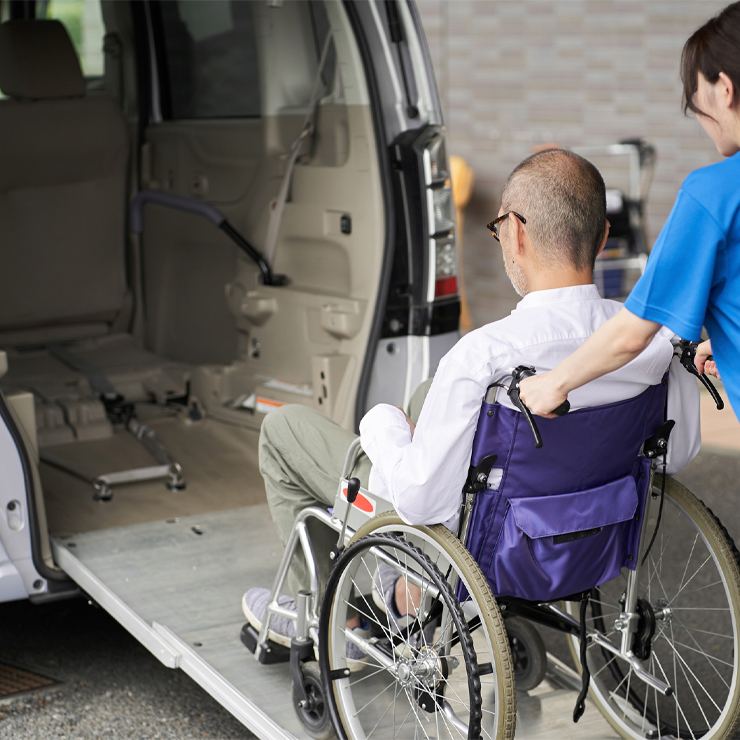
 Transportation services are an essential part of the resident experience within assisted living communities, helping support independence, quality of life, and overall well-being. But they also create significant operational risk, particularly when organizations transport medically vulnerable passengers who may require mobility assistance, wheelchair securement, supervision, or specialized accommodations.
For assisted living operators, reducing transportation exposures requires more than maintaining vehicles and hiring drivers. The strongest programs combine clear policies, thorough documentation, proactive vendor oversight, and consistent accountability. By focusing on several core areas of transportation risk management, organizations can help create a safer resident experience while building the documentation needed to defend the program when incidents occur.
Building an Effective Fleet Safety Program
Developing a comprehensive fleet safety program is a critical component of transportation risk management. While the specific structure may vary based on fleet size and resident needs, several core practices should be present in every program.
1. Driver Screening and Qualification
Driver selection remains one of the most important factors in helping reduce transportation-related losses. Therefore, it's vital to establish formal driver qualification standards that include motor vehicle record (MVR) grading criteria and frequency of MVR reviews, background checks, license verification, medical fitness evaluations where appropriate, and clearly defined criteria for acceptable driving performance.
MVR review at hire and annually is the minimum. However, employers may miss identifying potentially hazardous drivers in between MVR pulls. A best practice, where available, is continuous MVR monitoring and notification systems. Continuous MVR monitoring systems can quickly identify emerging issues such as repeated moving violations, distracted-driving citations, or license suspensions. These systems can enable corrective action and help prevent serious incidents, as long as they are monitored.
Driver qualification should not stop at hiring: maintain individual driver qualification files that include employment applications, driving records, training certifications, disciplinary actions, accident histories, and documentation of corrective measures. These files often become valuable evidence when transportation claims enter litigation.
Drivers who are leased, temporary staff, or independent contractors should all be vetted, trained, and supervised consistently with W-2 employees.
2. Telematics and Cameras
Global positioning system (GPS)/telematics systems can monitor location, acceleration, braking, cornering, cell phone use, provide driver scoring, and more, which can help to hold drivers accountable and reinforce safe driving behavior. Cameras can further reinforce safe driving and aid in reconstructing an accident. Exterior cameras can be set up to provide a 360-degree view of the vehicle, while onboard cameras monitor passengers. Systems with AI integrations can help address blind spots, identify issues securing a wheelchair, and alert the driver.
Similar to the continuous MVR monitoring, the system alone is not a defense; it is the timely and consistent response to the data that is critical.
3. Vehicle Inspection and Preventive Maintenance
Maintain documented inspection and preventive maintenance programs for all transportation vehicles, including wheelchair-accessible vans and buses. Complete daily pre-trip and post-trip inspections and retain that documentation; preventive maintenance schedules should address brakes, tires, lifts, securement systems, lighting, and other safety-critical components.
Maintenance records should document routine servicing, repairs, recalls, inspections, and corrective actions. In litigation, maintenance records often become key evidence regarding whether the organization exercised reasonable care in operating its fleet.
4. Training and Resident Assistance Procedures
Many transportation-related claims arise not from vehicle collisions but from incidents that occur during resident-assistance activities such as loading, unloading, wheelchair securement, passenger supervision, or resident transfers.
Provide hands-on training to all drivers and transportation staff in resident assistance techniques, wheelchair securement procedures, lift operation, passenger supervision, emergency response, fall prevention, and best practices in safe loading and unloading. Training should also address expectations regarding distracted driving, including mobile device use, navigation systems, and other in-vehicle distractions.
Further, organizations should conduct recurring refresher training and periodic competency evaluations to ensure procedures are followed consistently. Attendance of records, training materials, sign-in sheets, and competency assessments should all be retained as part of the facility's transportation defense file.
5. Incident Response and Documentation
Establish written incident-response procedures that clearly outline what staff members must do following any transportation-related event. These procedures should identify reporting responsibilities, escalation requirements, evidence-preservation expectations, and communication protocols.
At a minimum, staff should be trained to gather photographs, document roadway and weather conditions, obtain witness statements, preserve available video footage, record resident and employee accounts, and promptly notify designated leadership personnel. Telematics data, dash camera footage, vehicle inspection records, and maintenance records should also be preserved whenever an incident occurs.
Consistency is critical. Incomplete reports, missing photographs, or delayed investigations often create significant challenges when defending claims. Thorough incident documentation can substantially strengthen an organization's legal position if litigation follows.
6. Managing Third-Party Transportation Risk
While outsourcing transportation may reduce certain operational burdens, it does not eliminate risk. Assisted living facilities can still be named in lawsuits if residents are injured during transportation, particularly when allegations involve negligent selection, supervision, or oversight of a transportation provider.
Before engaging any transportation vendor, conduct a formal review process that evaluates licensing, safety records, driver-screening practices, vehicle-maintenance protocols, insurance coverage, and incident-reporting procedures.
Maintain current certificates of insurance, additional insured endorsements, contractual indemnification agreements, and documentation of periodic vendor reviews. These records can become critical evidence if questions arise regarding vendor selection or oversight following an accident.
Non-owned auto liability coverage is a critical component of an assisted living facility insurance program. This coverage can help protect the organization when employees use personal vehicles for business purposes.
Facilities should establish clear policies defining acceptable business use of personal vehicles, especially regarding client transportation. Ideally, transporting clients in personal vehicles should be avoided. Employees who are allowed to transport residents in personal vehicles should maintain at least the state-specified minimum liability limits, preferably higher limits, and provide proof of insurance on a regular basis. Risk managers should also review hired and non-owned auto (HNOA) exposures, subcontracting arrangements, and policy exclusions related to passenger assistance, loading and unloading, or medical transportation activities.
Operational Oversight and Defensibility
Transportation risk management is ultimately an operational discipline. Policies, training, inspections, telematics, and vendor oversight are only effective when implemented consistently and documented thoroughly.
 Organizations that audit their transportation programs, monitor performance trends, enforce policies, and preserve critical records are better positioned to protect residents and reduce the legal and financial consequences of transportation-related claims.
John Hague is an executive underwriter at Crum & Forster, a national property, casualty, and accident and health insurer providing specialty insurance products through its admitted and surplus lines insurance companies.
Provider magazine includes information from a variety of sources, such as contributing experts. The views expressed by external contributors do not necessarily reflect the views of Provider magazine and AHCA/NCAL. Learn how to submit an article.