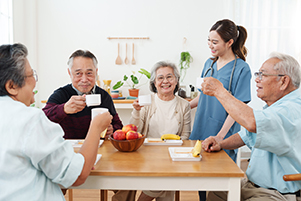
Several years ago, the U.S. Surgeon General issued an advisory describing social isolation as an epidemic that threatens public health, especially among older adults. In the advisory, the U.S. Department of Health and Human Services shared research that shows maintaining a strong social network promotes healthy aging.
Being in an active senior living community is one way that older adults can maintain strong social connections, and no place can this occur most frequently than in the dining hall.
Dining is about much more than nutrition. For many older adults, it is one of the most important social experiences of the day. It is an opportunity to connect with friends, interact with staff, maintain independence, and enjoy the simple pleasure of sharing a meal. Creating the right ambiance can make that experience feel welcoming and familiar rather than institutional.
Walk into a great restaurant and you immediately notice the atmosphere. The lighting is inviting. The noise level allows for conversation. The seating encourages interaction. The staff is attentive without being intrusive. And somehow, the entire experience makes you want to linger a little longer. It’s all about ambiance and senior living communities can—and should—create that same feeling in their dining spaces.
Hospitality Is the Key to Ambiance
While beautiful furnishings and attractive décor certainly have a role to play in creating a good dining ambiance, it’s more about how people feel when they enter the room. The most beautiful dining room design cannot compensate for an impersonal or hurried experience. This type of ambiance begins with the quality of interactions between staff and residents.
Dining staff should think of themselves as hospitality professionals, not simply people responsible for delivering meals. That means being attentive and welcoming while respecting residents' personal space and independence. It also means working quietly and efficiently so that staff activity doesn't become the focus of the dining experience.
Below are five additional ways senior living communities can boost the dining ambiance and improve the social well-being of their residents.
1. Turn down the noise. Restaurants often use acoustics to create an intimate environment. Senior living communities should do the same, particularly because background noise can be exhausting and frustrating for people with hearing loss. Thoughtful design can make a significant difference. Acoustic ceiling and wall treatments, cloth drapes, upholstered furnishings, and even linen tablecloths and napkins can help absorb sound and reduce reverberation.
The goal isn't complete silence. Dining should be lively and social. The goal is to create an environment where residents can comfortably hear the person sitting across the table and participate in the conversation.
2. Focus on lighting. Lighting is another important—and sometimes overlooked—element of senior dining. As people age, vision often changes, making it more difficult to navigate spaces, distinguish objects, and read menus. Good lighting can support both safety and independence, and some of the best light comes from daylight, which can help residents stay connected to the rhythms of the day.
Lighting can also play a role in supporting residents who experience changes in behavior associated with "sundowning." Maintaining appropriate levels of light as the day progresses can help create a calmer, more comfortable environment.
3. Seating design isn’t just table stakes. In assisted living communities and skilled nursing environments, table configurations should make it easy for residents to move into and out of the dining area. Accessibility shouldn't require residents to navigate a maze of tables or depend unnecessarily on staff for assistance.
Small tables can encourage meaningful interaction and a more natural setting for conversation, and thoughtful seating assignments can further enhance the experience. Residents who have compatible personalities, interests, or conversational styles may enjoy sharing a table. When dining becomes an opportunity to build and maintain friendships, the meal becomes much more than a daily routine.
4. Keep room for spontaneity. While planning is key to smooth dining operations, a no-reservation approach that caps party size at six allows residents to decide when and with whom they dine. This creates the possibility for an impromptu meal with friends and to meet new friends without the pressure of pre-planning every social interaction.
5. Learn from ratings and reviews. Resident feedback is easy to get. Almost everyone has an opinion about dining and is willing to share it. In addition to casual resident feedback, formal surveys can identify trends and concerns so that senior communities can continuously improve the dining experience and make it more than a meal.
Gathering around a table to break bread with others has always been the most outward display of hospitality, and the social interaction it enables has been proven to boost the health of older adults. When senior living communities approach dining with the same attention to hospitality, design, and personalization that residents would expect from a favorite restaurant, a meal becomes something more: a daily opportunity for connection, choice, and friendships.
 John Ralston, director of culinary services at Orchard Cove Community at Hebrew SeniorLife, has more than 35 years of experience in the hospitality industry. He enjoys collaborating with residents to provide the highest level of satisfaction in their dining experiences.
Provider magazine includes information from a variety of sources, such as contributing experts. The views expressed by external contributors do not necessarily reflect the views of Provider magazine and AHCA/NCAL. Learn how to submit an article.