A practical road map can help senior living leaders turn energy investments into stronger operations, healthier campuses, and more predictable costs.
For senior living providers, sustainability is not a side project or a branding exercise. Done well, it is an operating strategy; one that can moderate volatile utility costs, improve resident comfort, protect capital budgets, and demonstrate stewardship. The strongest business case begins by asking not, “How many solar panels can we install?” but “How can energy investments advance our mission and strengthen the bottom line?” The answer usually involves solar, but it begins well before the first panel is installed.
 |
|
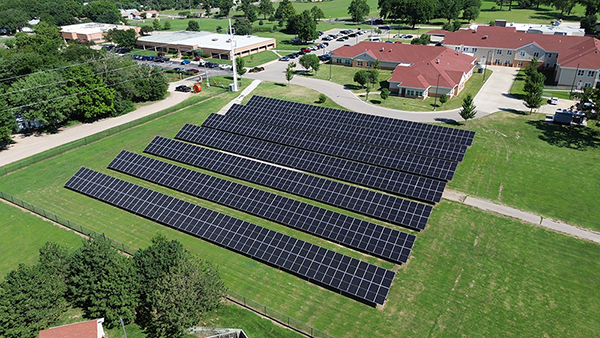
Incorporating solar on their campus is not a side project for senior living providers, but rather a critical operating strategy. |
Tie Sustainability to Mission and Margin
Every dollar not spent on energy can be redirected toward care, staffing, building renewal, or other priorities. That makes energy performance part of financial stability, not simply an environmental metric.
Establish clear goals at the outset. Do you want to lower operating expenses and reduce exposure to future rate hikes, improve indoor conditions, cut emissions, or increase resilience? Then report progress in both dollars and mission outcomes. A project becomes more meaningful when leaders can show which care, campus, or workforce needs the savings helped support.
Reduce the Load Before Producing Power
Solar offsets electricity use, but it does not fix waste. Begin by benchmarking each building and examining lighting, schedules, controls, ventilation, HVAC performance, and water use. Retro-commissioning—the process of commissioning a facility’s existing systems—can reveal faulty sensors, improper scheduling of makeup air and temperature setbacks, or outdoor-air dampers that no longer operate as intended. These measures often deliver faster returns while improving comfort and indoor air quality. Cutting consumption first also means a smaller solar array can offset a larger share of the remaining bill.
Next, evaluate electrification, especially when boilers or chillers are nearing replacement. Electrification means replacing equipment that burns fossil fuels with more efficient systems powered by electricity. Ground-source heat pumps can be paired effectively with onsite solar power: efficiency reduces total demand, while electrification shifts more of the campus energy budget to a resource the provider can partly produce.
With a recent Wisconsin client, a 96,000-square-foot facility’s geothermal system carried a higher gross cost than a conventional boiler-and-chiller system; but a federal incentive reduced its net-first cost below the conventional alternative. The takeaway is not that every campus will see the same result; it is that available incentives and lifecycle operating costs can materially impact a replacement decision.
 |
|
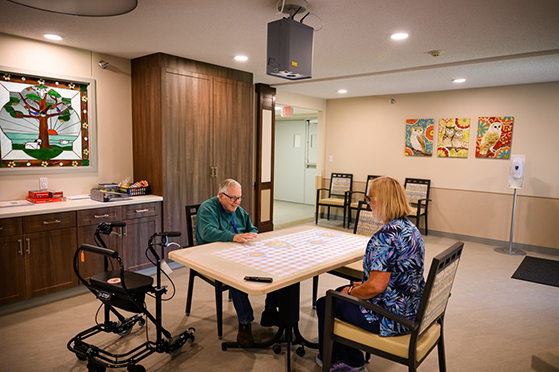
When a provider undertakes solar efforts in their facility or campus, residents and staff can realize benefits such as better lighting, quieter equipment, and more consistent temperatures. |
Design Around Actual Use and Utility Rules
Tracking and reviewing monthly utility bills is always a great first step in managing a facility’s energy costs. But to make informed decisions around solar design or finding inefficiencies of existing electrical equipment, you need more detailed data. All utilities will let you request a full year of hourly or 15-minute interval data that enables you to study the campus load shape: when electricity is consumed, when peaks occur, and what creates demand charges. Review the utility’s tariffs, interconnection requirements, and compensation for exported solar power. Model planned additions, occupancy changes, and future electric HVAC loads before sizing solar or batteries. Otherwise, a system can look attractive on annual kilowatt-hours yet underperform financially because production and campus demand do not align.
Compare Capital Structures—and Verify the Math
Providers should compare ownership, debt, leases, power purchase agreements, grants, and utility incentives. Tax-exempt organizations may use elective pay, often called direct pay, for qualifying clean-energy projects such as installing solar panels or geothermal heat pump HVAC systems. Generally, Section 48E credit is worth 30 percent of the project costs and the amount is paid directly to nonprofits after the project is put into service. Eligibility is project-specific, so tax and technical advisers should be consulted.
Also, timing matters. Incentive rules are changing, so confirm start-of-construction, placed-in-service and foreign entities of concern (FEOC) requirements before signing contracts for design and construction.
Ideally, try calculating value using net present value, lifecycle cost, and rate of return to make sure the technology investments are in line with the organization’s overall investment standards. Test scenarios that consider energy-price escalation above inflation rates, make sure to include maintenance and financing costs.
A 300-kilowatt rooftop example presented to a group of senior living leaders showed a $630,000 gross cost, reduced by modeled federal and utility incentives, with an estimated six to twelve-years simple payback depending on the utility. Solar will always provide a positive return on investment when sized correctly.
 |
|
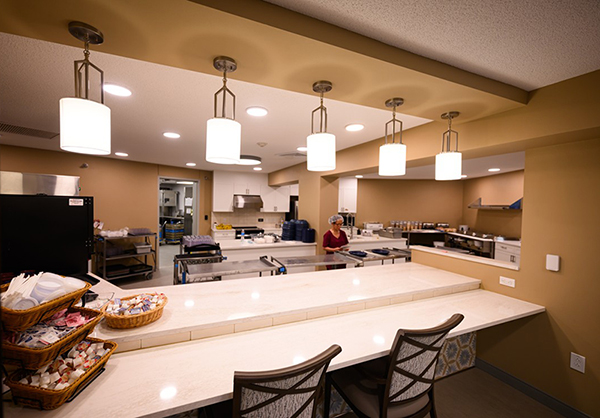
Solar and sustainability can strengthen a senior living campus, as dollars not spent on energy can be redirected toward care, staffing, building renewal, or other initiatives. |
Protect Residents and Operations During Implementation
Occupied campuses require deliberate phasing.
- Map noise, access, dust, landscaping, glare, fire safety, and outage risks by zone.
- Coordinate quiet hours, infection-control measures, wayfinding, and resident communications.
- Train facilities staff on the new systems.
- Commission the systems, conduct outage drills where appropriate, define monitoring responsibilities, and review warranties, maintenance, insurance, and end-of-life obligations.
A technically sound project can still fail residents if construction disrupts daily life or operators are not prepared to manage new equipment.
Be careful not to confuse solar generation with backup power. Grid-tied solar normally shuts down during an outage. Robust resilience requires coordinated components: solar, batteries, and controls capable of islanding (operating independently using onsite power sources in the event of an outage), and sometimes gas generator integration. The system must be engineered and tested as a whole. Batteries may also reduce demand charges, but their resilience and financial roles should be modeled separately.
Make Performance Visible
Residents and staff may not receive a direct check from solar, but they can benefit from protected operating budgets, better lighting, more consistent temperatures, quieter equipment, healthier grounds, and visible mission leadership. Share those connections through dashboards, resident presentations, staff engagement, tours, annual performance reports, and signage. The goal is to make the project a living expression of stewardship, not simply another mechanical system.
Monitor utility bills and system output after completion, normalize results for weather and occupancy, and compare measured performance with the original forecast. Transparency turns a capital project into an ongoing management discipline and builds confidence for the next investment.
Start With a 90-Day Plan
In the first two weeks of planning and consideration, gather interval data, utility tariffs, and facility information, then define financial and mission goals. Over the next month, pursue controls, ventilation, and other quick wins. By weeks seven through ten, screen geothermal, solar and storage, map incentives, and compare financing. Finish with an independent review of assumptions and a documented go/no-go decision. Early utility engagement is especially important because interconnection studies and approvals can affect both schedule and economics.
Solar and sustainability can strengthen a senior living campus—financially, operationally, and culturally—but only when the sequence is right. Benchmark first, reduce waste, plan electrification, size systems to real loads, capture available incentives, and verify results. That is how clean energy moves from a good intention to a durable investment in residents, staff, and the mission.
 Henry Hundt, MPA, is Hoffman’s director of sustainability who primarily focuses on renewable energy design and planning and building performance. Hundt’s responsibilities center around techno-economic modeling for solar and storage microgrids, net-zero energy building implementation and project management. He can be reached at
hhundt@hoffman.net.
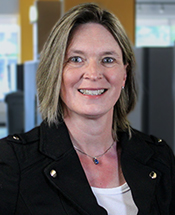 Julie Heiberger is the Senior Living Market Leader and a senior project architect for Hoffman Planning, Design & Construction, Inc. With more than 30 years of experience, Heiberger’s expertise centers on designing sustainable senior living facilities that address the latest care models and industry trends. She is a member of the American Institute of Architects, the National Council of Architectural Review Boards, and the Board of Directors of the Society for the Advancement of Gerontological Environments. Email her at jheiberger@hoffman.net.
Provider magazine includes information from a variety of sources, such as contributing experts. The views expressed by external contributors do not necessarily reflect the views of Provider magazine and AHCA/NCAL. Learn how to submit an article.