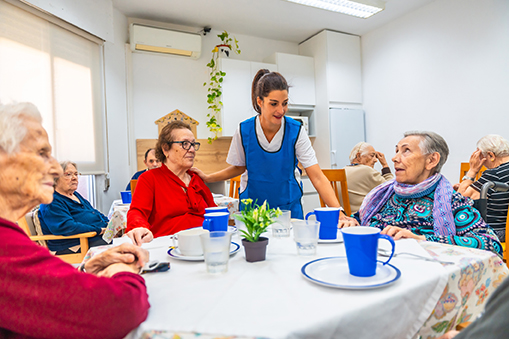
A resident declines a group activity. Another becomes distressed during morning care. A third walks confidently in the therapy gym but hesitates outside a crowded dining room.
Each situation invites a familiar response: encouragement, redirection, or another attempt later. Each also deserves a deeper question: What is the resident experiencing that the care team may be overlooking?
Noise, glare, unfamiliar touch, competing conversations, and difficulty interpreting surroundings can affect ordinary tasks. In skilled nursing facilities (SNFs), quality of life depends partly on whether the environment makes participation possible. Individualized sensory support offers teams a practical way to connect everyday surroundings with rehabilitation, nursing, and meaningful engagement.
Understand the Experience Before Choosing the Intervention
Sensory integration describes how the nervous system organizes sensory information to support responses and action. Individualized sensory support in SNFs should be distinguished from formal sensory integration therapy. Personalized music, environmental adjustments, and tactile activities have different purposes and evidence.
The starting point is observation. Does distress occur when several people speak simultaneously? Does a resident struggle to locate objects against a busy background? Is an activity enjoyable in a quiet space but overwhelming in a group?
Teams must also investigate pain, delirium, medication effects, hearing or vision impairment, and other clinical explanations. A new behavioral change should never be attributed automatically to sensory needs.
A brief sensory profile can document preferred sounds, lighting, touch, activities, and routines, alongside sources of discomfort. Residents should guide choices whenever possible. Families can contribute history, while direct care staff contribute daily observations.
Make Everyday Environments More Accessible
Innovation can begin with changing the conditions surrounding a task.
Consider a resident who repeatedly declines breakfast in the dining room. The team could examine seating, background television, lighting, communication, and whether hearing aids are functioning. A quieter location or predictable routine might make breakfast more accessible. The response should be observed rather than assumed.
Dressing may similarly be supported by explaining touch before initiating it, presenting one item at a time, and allowing additional processing time.
These adjustments deserve attention alongside equipment purchases. A specialized sensory room cannot address every barrier residents encounter where they eat, receive care, and socialize. The guiding question is practical: Which resident need is this intervention intended to address?
Match Innovation to a Meaningful Goal
Personalized music, tactile engagement, nature experiences, and interactive technology offer different opportunities. Their value depends on resident preference, clinical appropriateness, and the outcome being pursued.
Music illustrates why enthusiasm must be paired with evidence. A 2025 Cochrane review of 30 studies involving 1,720 people living with dementia found that music-based therapeutic interventions probably improve depressive symptoms compared with usual care and may improve overall behavioral problems.1 Benefits for agitation, cognition, or quality of life were not established, and lasting effects remained uncertain. These findings concern structured interventions, not every use of background music.
A resident-selected playlist may offer enjoyment or connection. Staff should observe whether it supports engagement, creates distraction, or evokes distress. Personalized listening should also be distinguished from treatment delivered by a qualified music therapist.
Tactile activities can connect sensory experience with familiar roles: handling gardening materials, folding preferred fabrics, or using appropriately selected household objects. Materials should be adult-appropriate and consistent with infection prevention and individual safety needs.
Interactive projections may offer a reason to reach or initiate movement; digital photographs may support conversation with family. Providers should evaluate whether the experience is understandable, comfortable, and meaningful. Novelty alone does not establish benefit.
Connect Sensory Support With Mobility
Sensory support becomes especially relevant when it helps residents access movement and rehabilitation.
Physical therapists assess balance, gait, transfers, and factors affecting mobility. Occupational therapists examine environmental and sensory demands in daily activities. Speech-language pathologists support communication and cognitive strategies. Nursing and nursing assistants identify patterns across the day. Activities and life enrichment staff connect preferences with meaningful engagement.
A resident who avoids walking to lunch may need strength and balance treatment alongside better lighting, a less distracting route, appropriate cueing, or assistance managing fatigue.
A 2025 Cochrane review found that exercise probably reduces falls in care facilities. Individually tailored, multifactorial interventions implemented with facility staff involvement also probably reduce falls. Exercise benefits were not sustained when exercise stopped.2 Sensory strategies should support this broader clinical work; a sensory activity alone should not be presented as a proven fall-prevention program.
Make Effective Approaches Part of Daily Care
A promising approach has limited value if only one employee knows how to use it.
Providers can begin with a small interdisciplinary pilot addressing a specific challenge, such as distress during dressing or difficulty joining meals. The team should establish a baseline, identify the resident’s goal, introduce a clearly described adjustment, and review the response.
Documentation should make the approach repeatable. “Enjoys music” offers little direction. Recording chosen music, comfortable volume, preferred timing, and observed response gives colleagues something usable across shifts. Withdrawal, fatigue, discomfort, or refusal calls for reassessment. Participation remains a choice.
Measure the Life the Intervention Makes Possible
Attendance and device usage reveal whether an intervention occurred. They do not establish that it helped.
More meaningful measures include resident-reported comfort, enjoyment, participation in a chosen task, assistance needed during care, and observed distress. Falls and medication use may warrant monitoring, but changes require careful interpretation because many factors influence them.
A quieter resident may be comfortable, disengaged, or tired. Silence alone is an inadequate measure of success.
Five Practical Takeaways for SNF Teams
- Assess before adding stimulation. Explore clinical needs and environmental triggers before selecting an approach.
- Personalize around meaningful goals. Connect interventions to experiences the resident values.
- Start with everyday surroundings. Address noise, glare, clutter, and communication barriers.
- Share successful approaches. Document preferences, staff actions, timing, and resident responses.
- Measure benefit beyond attendance. Track comfort, enjoyment, function, and distress while respecting refusal.
The next step for skilled nursing leaders is concrete: identify one difficult daily experience, bring the relevant disciplines together, and test an individualized adjustment.
 Quality of life becomes visible in ordinary moments: a meal enjoyed, a task chosen, a conversation sustained, or a walk taken with greater confidence. Effective innovation helps make those moments possible.
Arjun Dutt is a physical therapist and rehabilitation leader with experience in skilled nursing and post-acute care. His work emphasizes translating clinical strategies into practical, individualized care. He may be contacted at arjundutt91@yahoo.com.
Sources
1. Van der Steen JT, et al. Music-based therapeutic interventions for people with dementia. Cochrane Database of Systematic Reviews. 2025;3:CD003477. doi:10.1002/14651858.CD003477.pub5.
2. Dyer SM, et al. Interventions for preventing falls in older people in care facilities. Cochrane Database of Systematic Reviews. 2025;8:CD016064. doi:10.1002/14651858.CD016064.
Provider magazine includes information from a variety of sources, such as contributing experts. The views expressed by external contributors do not necessarily reflect the views of Provider magazine and AHCA/NCAL. Learn how to submit an article.