
In December 2019, Elizabeth Burns, MD, accepted the role of chief medical officer (CMO) at Avamere Living, a role her boss, Avamere founder and former CEO Rick Miller, could not yet describe. “We know we need a chief medical officer,” he told her. “We’re just not exactly sure what we need, but we know we need one.”
Within months, the COVID-19 pandemic settled the issue for the entire sector. “COVID became a pivotal moment that fundamentally reshaped physician leadership in post-acute and long term care,” Burns reflected. “It demonstrated that physicians are essential, not only during times of crisis, but also in shaping strategy, driving innovation, improving quality, and preparing organizations for the future.” For decades, federal regulation has required a medical director in every skilled nursing facility. As residents’ needs grow more complex, providers are modernizing their physician leadership models and ensuring that the medical director’s role at the facility level is effectively supported by the C-suite.
More Complexity, More Responsibility
Long term care professionals know all too well what’s driving these changes. With more older adults living at home longer, resident acuity continues to steadily climb. “Providers are increasingly asked to serve residents with greater clinical and behavioral needs while demonstrating measurable outcomes and reliably managing transitions to and from hospitals,” Mark Prifogle, chair of the American College of Health Care Administrators, told Provider earlier this year.
As facility operators adapt, their medical directors have taken on more and more responsibility. “The medical director role is a role that’s been defined by federal regulation for decades, and it is very specific from a regulatory standpoint,” observed Richard Feifer, MD, MPH, FACP, a PALTmed director at large who served as chief medical officer and executive vice president at Genesis HealthCare. “The day-to-day reliance on the medical director, the engagement, the involvement—that’s what’s been increasing over the last number of years.”
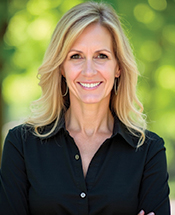 Burns, who was named chief medical officer at American Health Care Association/National Center for Assisted Living in 2025, described a role that expanded far past its statutory remit. “The medical director role has evolved well beyond regulatory oversight and clinical compliance,” she said. “Today’s medical directors are increasingly expected to lead quality improvement, champion evidence-based care, foster interdisciplinary collaboration, leverage data and technology, and help organizations succeed in an increasingly complex health care environment.”
Masonicare, a Connecticut provider whose services span independent living through hospice, shows just how much responsibility the modern medical director shoulders. As CEO JP Venoit told Provider, Masonicare has three medical directors: one for its behavioral health hospital, one for hospice and home care, and a third who oversees everything else—nursing homes, assisted living, and independent living.
“Our residents now have more choice,” he explained. “People who would have been in a nursing home ten or twelve years ago, they’re in assisted living, residential living, or their home. We’ve taken the approach that our medical directors help us keep them in the setting they call home longer and safer.”
From the Bedside to the Boardroom
There’s no single threshold at which a provider needs a CMO. Feifer pointed to scale: “For organizations that operate multiple facilities and have more overarching needs for medical oversight and medical leadership, that’s where the CMO comes in,” he said.
Titles vary, as well, as some organizations opt for a chief clinical officer label or simply elevate their medical director to a senior management role. Masonicare’s three medical directors, for instance, work alongside the C-suite.
No matter the title, the role requires a bird’s-eye view. A CMO (or equivalent) fields clinical issues across the entire organization rather than at a single facility, tying those issues to broader strategic concerns.
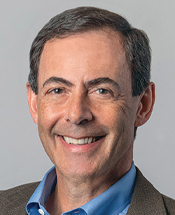 “The CMO role is one that often involves the wearing of two hats simultaneously,” Feifer explained. “There’s the medical leadership hat that’s focused on quality of care and medical care and appropriate staffing. And then there’s the business hat, helping the enterprise succeed. The enterprise needs to be successful to fulfill its mission, and it needs to do so in a medically responsible way.”
“I liken it to being a bridge between the bedside and the boardroom,” said Shealynn Buck, MD, CMO at Lockton Companies, where she helps organizations design clinical strategies that improve outcomes, quality, and value. “As you think about both clinical and financial outcomes, having that expertise that can bridge those pieces, that’s really important.” She argued that whether an organization needs a CMO is less about size than about complexity.
She also described the CMO as an ambassador to the health care ecosystem itself. “Whenever there is the need for ensuring clinical integrity, clinical leadership, and representing that in the health care market, a CMO can be really valuable for that,” she said.
What Providers Look For
As providers expand their physician leadership models, they’re looking for a few key competencies in potential CMOs. Perhaps most important is the ability to synthesize that bird’s-eye view of the health care industry with the granular concerns of a company or even a facility.
“CMOs sit at an intersection point between patient care and the business,” Buck explained. “Having some business acumen but also understanding technology and how technology is impacting health care is really important.” She stressed the need for a “dot-connector mindset” that makes it possible to see where an individual community’s needs fit within the larger system, and how that system can be used to meet those needs.
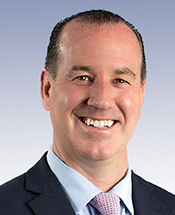 For Feifer, the ideal CMO candidate is someone with a high level of leadership experience. “One of the most important qualities is someone who has led organizations and has been responsible for the overall performance, medical and otherwise, of large teams,” he said. “This is not something that necessarily comes naturally to an individual physician who’s been providing direct patient care all of their career. This is a different skill set that takes training and mentorship to develop.”
Then there’s fluency in the myriad tongues one must speak to lead a health care business—another trait that distinguishes CMOs from medical directors. “The CMO needs to speak the language of the frontline doctor; that’s a medical language,” Feifer explained. “Then the CMO needs to speak the language of the chief financial officer; that’s a financial language. Then they need to speak the language of the head of business development; that’s a sales language. For a CMO to be highly successful, they need to be fluent in all of those languages and more.”
Buck identified one competency that may seem counterintuitive. “As clinicians, as physicians, we’re often trained to be the decision-maker,” she said. “But as complex as health care is, not one person has all the answers. As a physician leader and CMO, it’s important to have a network of folks that you’re not afraid to ask questions of and have some of your blind spots tested.”
A Seat at the Table
A CMO can support the medical team only if the organization supports the CMO. Feifer’s advice in that regard is simple: “Ensure that they have a seat at the table and are invited to offer their unique perspective on all matters pertaining to the enterprise,” he said. “They should never be pigeonholed or just restricted to the one corner of the organization that is medical care, but they should be a full-fledged leader that comes at every issue with a unique lens.”
For Burns, a successful physician leadership model is a holistic one, with the high-level and facility-level roles working in tandem toward the same objectives. “Rather than thinking of the medical director and CMO as separate roles, I view them as part of a continuum of physician leadership,” she said. “The medical director remains the clinical leader closest to resident care, while the CMO extends that clinical perspective across the organization, translating frontline insights into enterprise-wide strategy.”
 Feifer echoed her perspective, arguing that an enterprise physician leader’s first responsibility is “ensuring that every facility has a strong medical director performing at the top of their abilities.” From there, the job is to foster a culture of “continuous performance improvement,” one where the clinical team is working collaboratively to deliver the highest quality of care. Done right, this approach naturally turns the care team into a training ground for future physician leaders, whether at the facility or enterprise level.
Reflecting on the evolving role of physician leadership, Burns cited a line credited to quality-improvement scholar Paul Batalden: “Every system is perfectly designed to get the results it gets.”
“If we want different outcomes for residents, families, and providers, we must intentionally redesign the way physician leadership is integrated into our organizations,” Burns concluded. “That means modernizing both the medical director role and the chief medical officer role so physician leaders have the influence and support within the leadership team to improve quality, access, and innovation in person-centered care across the continuum.”
Steve Manning is a journalist based in New York City.